String of Turtles Peperomia prostrata
How Often Should You Water String of Turtles
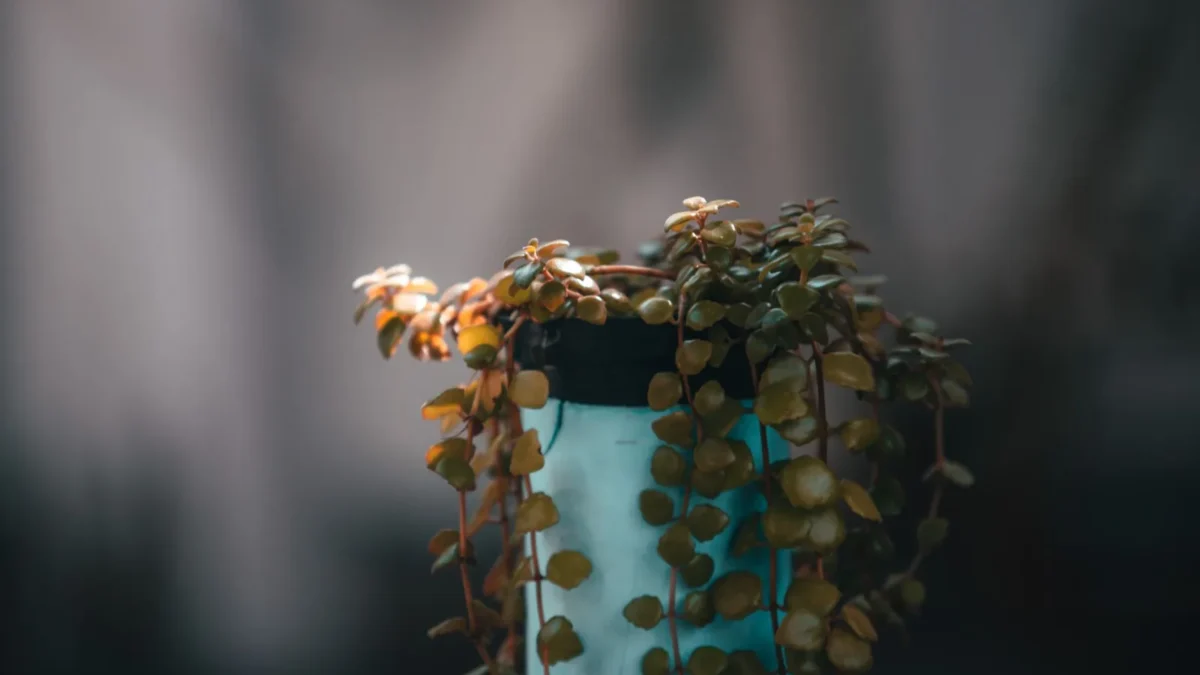
Quick answer: Water your String of Turtles when the top inch of soil feels dry to the touch. In summer with good drainage, this usually means watering around twice a week, dropping to once a week in winter.
| Botanical name | Peperomia prostrata |
|---|---|
| Light | Bright indirect light in growth; full light in winter; avoid direct summer sun |
| Watering | Water when top 1 inch of soil is dry; moderate summer, sparse winter |
| Humidity | Prefers humid air; adapts to lower household humidity |
| Temperature | 18–30°C (65–86°F); keep above 10°C (50°F) |
| Soil | 50% peat/coco coir + 50% perlite/sand/pumice; loose, airy, slightly acidic pH 6.0-6.5 |
| Feeding | Balanced liquid fertilizer monthly spring to summer; dilute to half or quarter strength |
| Size | 0.1–0.5 m height and width |
| Difficulty | easy |
Understanding the Watering Schedule
How often to water String of Turtles depends on your soil, light, temperature, and season. The plant stores water in its thick, succulent leaves and stems, so it actually prefers to dry out between waterings. This means it’s genuinely safer to underwater than to overwater.
During the growing season in spring and summer, water moderately. Once temperatures drop in autumn and winter, reduce watering significantly—the plant enters a slower growth phase and needs far less moisture. Keep the soil on the drier side during these cooler months.
Your soil mix makes a real difference. If you’re using a well-draining blend of 50% peat or coco coir and 50% perlite, sand, or pumice, water moves through quickly and you’re unlikely to accidentally keep the roots soggy. With less draining soil, you’ll need to water less frequently.
How to Check if Your Plant Needs Water
The simplest method is the finger test: push your finger into the soil and water only when the top inch feels dry. Don’t wait until the soil is rock-hard all the way down, but don’t water while it’s still visibly moist either.
You can also use the leaf squeeze test. Gently squeeze one of the lower leaves—if it feels firm and plump, the plant has enough water stored and doesn’t need watering yet. If the leaf feels slightly softer or wrinkled, watering time is approaching.
Better yet, use bottom watering to keep moisture off the dense mat of leaves on top, which can lead to rot. Place the pot in a shallow dish of water and let it absorb moisture from below for 10–15 minutes, then remove it and let excess drain away.
Warning Signs of Watering Problems
Yellow leaves usually mean you’re watering too often. The soil becomes waterlogged, roots can’t breathe, and the plant starts to struggle.
Leaf drop is almost always a sign of overwatering or cold exposure below 50°F (10°C). If fallen leaves feel soft and mushy, overwatering is the culprit. Root rot from excessive moisture is the most common disease and the hardest to fix, so err on the side of drier rather than wetter.
Remember: this plant is drought-tolerant. It forgives a missed watering far better than it forgives being kept constantly wet.
Read the full guide: String of Turtles Care: The Complete Growing Guide
More about String of Turtles
The same problem in other plants
- How Often to Water Pencil Cactus: A Complete Guide
- Elephant Bush Watering: How Often and How Much
- How Often Should You Water Your Fishbone Cactus?
- How Often to Water Your Mini Monstera
Sources
- String of Turtles (Peperomia prostrata) Plant Care: What to Know – Healthy Houseplants
- String of Turtles (Peperomia prostrata): All You Need To Know
- Peperomia prostrata hort.
Photo: Maahid Photos / Pexels, Pexels