Venus Flytrap Dionaea muscipula
Venus Flytrap Care: The Complete Guide
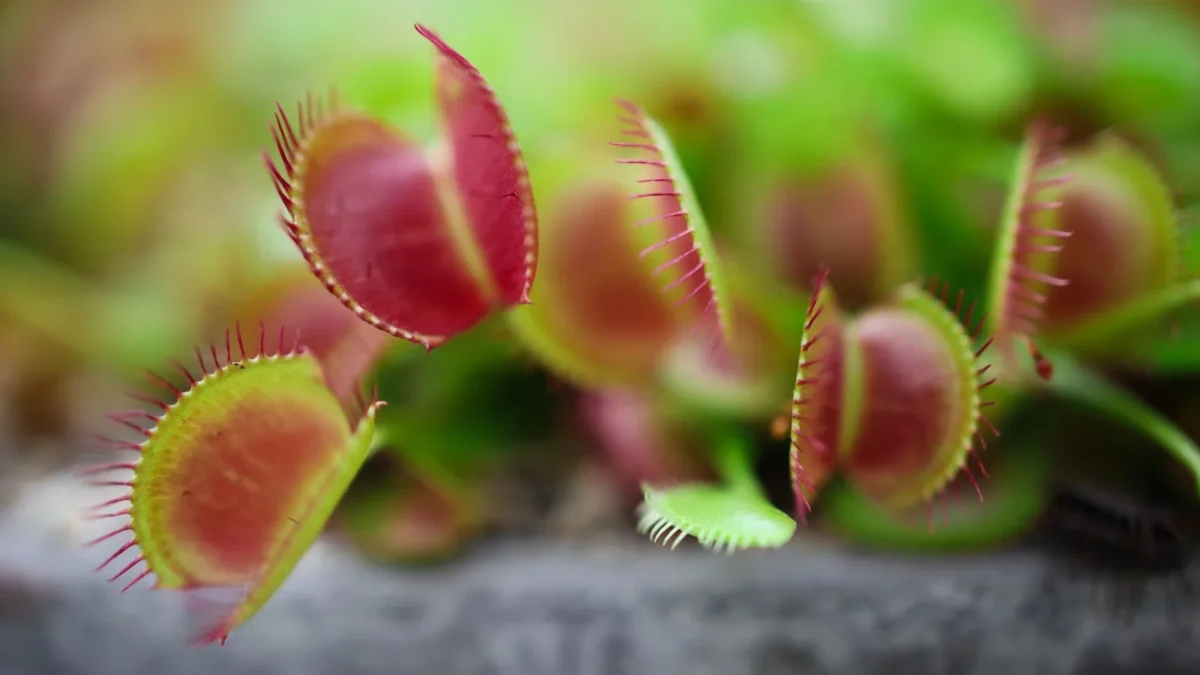
Venus flytrap care is straightforward once you understand the plant’s unique needs as a carnivorous bog species. Unlike most houseplants, Venus flytraps require rainwater, nutrient-poor soil, high humidity, and a winter dormancy period to thrive. With these essentials in place, you’ll have a healthy, fascinating plant that can live for decades.
| Botanical name | Dionaea muscipula |
|---|---|
| Light | Full sun to partial shade; 12 hours optimal; south or west-facing exposure |
| Watering | Rainwater only; sit in 1 cm water saucer spring/summer, ½ cm winter; water from below |
| Humidity | Above 50%; thrive with humidity despite adapting to drier climates |
| Temperature | 10–27°C (50–80°F); cool winter dormancy above 10°C required |
| Soil | Half sphagnum peat/moss, half coarse horticultural sand; nutrient-poor only |
| Feeding | Never use fertilizer; gets food from insects; nitrogen causes root burn |
| Size | Up to 10 cm tall; 2–6 inches maximum height |
| Difficulty | moderate |
| Cats | ✓ non-toxic |
| Dogs | ✓ non-toxic |
Key points
- Use rainwater only and water from below; keep soil consistently moist in a 1 cm water saucer (spring/summer) or ½ cm (winter)
- Provide 12 hours of light daily from a south or west-facing window for optimal growth
- Use half sphagnum moss and half coarse horticultural sand—never regular potting soil
- Never use fertilizer; nitrogen causes root burn and can kill the plant
- Maintain humidity above 50% and temperatures between 10–27°C (50–80°F) with a cool winter rest
- Feed live insects only, about once monthly during the growing season
Light Requirements for Venus Flytraps
Light is crucial for the health of your Venus flytrap. The plant needs at least 6 hours of light daily, with 12 hours being optimal. Position your plant in a south or west-facing window that receives several hours of direct sun.
If your plant’s leaves are stretching, appearing pale, or drooping, it’s not getting enough light. Growing them in a gloomy position will cause traps to turn black more frequently. When grown under glass indoors, ensure the plant receives full light with shelter from excessively hot afternoon sun.
Watering Your Venus Flytrap
Water type and delivery method
Tap water kills Venus flytraps, so use rainwater or distilled water instead. These plants aren’t tolerant of water containing dissolved minerals, salts, or chlorine.
The key to proper Venus flytrap watering is the water tray method. Sit your plant in a saucer and let it absorb water from below rather than pouring water directly onto the soil. During spring and summer (the growing season), maintain 1 cm of water in the saucer. In winter, reduce this to ½ cm. Never let the plant dry out completely, as it’s a bog plant that requires consistent moisture.
Watering frequency and checking moisture
On average, water your flytrap every two to three days during the growing season. During spring and summer, aim to water every 1–2 weeks; in winter, reduce watering to once every 2–4 weeks.
To test if you’re giving the right amount of water, pick up some soil and squeeze it gently—it should feel moist but not release excess water when squeezed.
Humidity and Temperature Needs
Humidity
In the wild, Venus flytraps are exposed to humidity levels surpassing 50% almost all year long. Even though they can adapt to drier climates, they thrive with some humidity. Using the water tray method naturally maintains the humid environment these plants need without exceeding requirements.
Temperature
Keep your Venus flytrap at temperatures between 10–27°C (50–80°F). The plant needs a cool rest over winter, but the temperature must stay above 10°C (50°F). This dormancy period is essential—without it, the Venus flytrap exhausts itself and dies within one to two years.
Extremely hot summer temperatures of 100°F or more can dry out your plant, turning leaves black.
Soil and Repotting Guidelines
The correct potting mix
Using the right soil is critical for Venus flytrap care. The potting medium should be half good-quality sphagnum peat or peat moss and half coarse, horticultural sand. A peat-free alternative is sustainable farmed sphagnum moss.
It’s very important to use nutrient-poor soil; regular potting soil or enriched soil will burn the roots and kill the Venus flytrap very quickly. Minerals left in soil after water evaporation will also cause root rot and plant wilting.
Repotting schedule
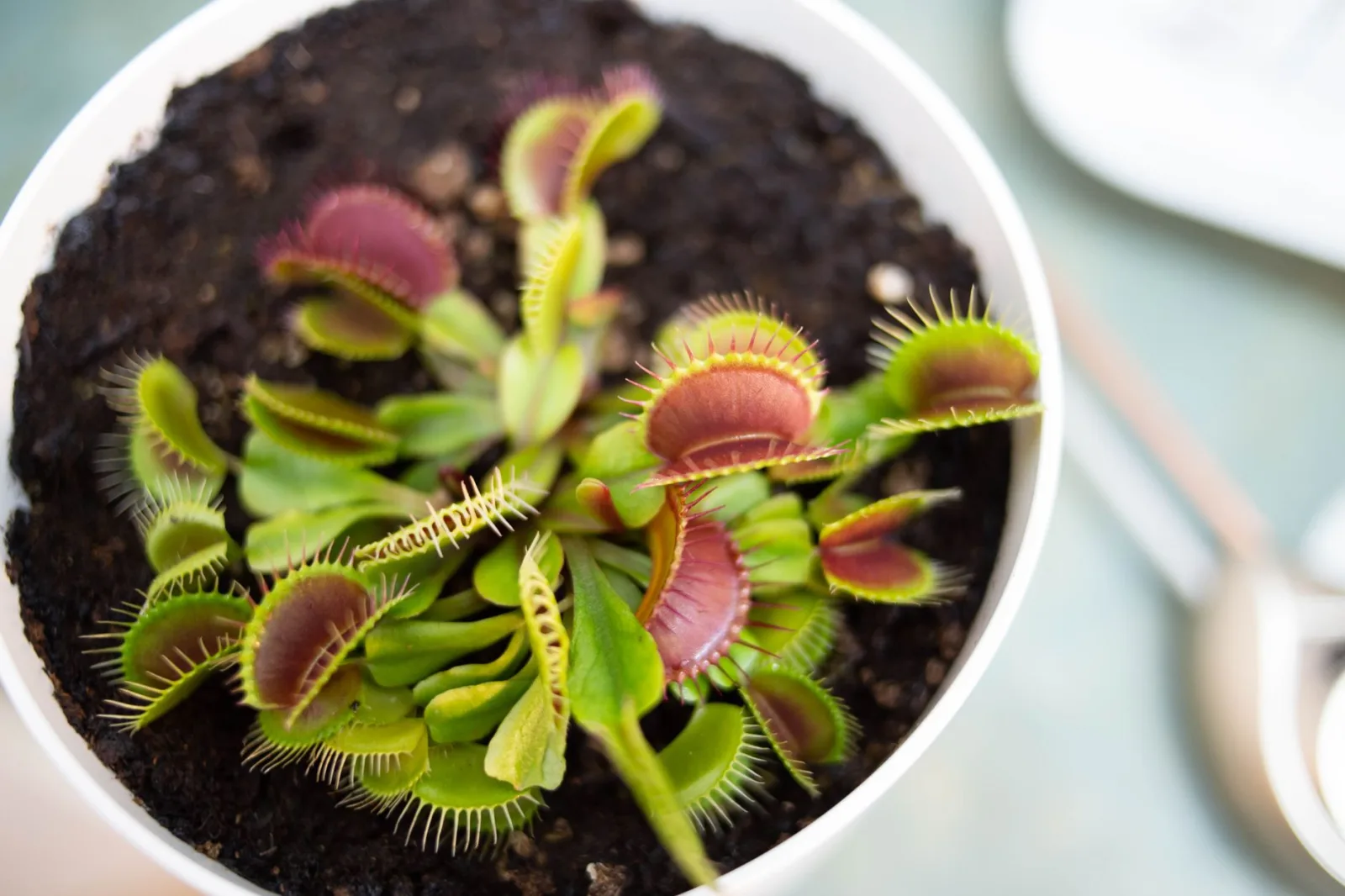
Although Venus flytraps grow slowly, repot them every 1 to 2 years to freshen the soil and prevent minerals from building up. Repot in spring if needed. New plants won’t need repotting for at least a year.
Feeding and Fertilizing
Never use fertilizer
Don’t ever feed Venus flytraps with fertilizer—anything with nitrogen can kill them. They get their food from insects instead. Any fertilizer can cause mineral burn and the loss of leaves; Venus flytraps must be grown in nutrient-free soil or the plant will turn black and die.
Feeding live insects
Venus flytraps can go up to a month or two without eating insects. If grown indoors where crawling insects are few, feed your plant about once a month during the growing season from spring to fall.
Feed only live insects that the plant can catch naturally in the wild. Don’t feed your plant bits of sausage, chocolate, or anything else it wouldn’t catch in nature—this is a guaranteed way to cause the trap to rot. Don’t feed dead bugs or processed foods; they can sense movement and can’t taste anything, and this can kill them.
Common Problems and Solutions
Black leaves
If the oldest traps in the rosette are turning black, or if the blackening trap has already caught and digested several insects, this is likely a normal part of the trap’s lifecycle. However, if leaves are blackening prematurely, the causes include insufficient light, wrong soil, overwatering, or excess heat. Remove any Venus flytrap black leaves, but never pull on dead leaves as you may damage the bulb and root—hold only the black leaves that require trimming. If there is more than one black leaf, trim them at the same time to limit stress.
The entire plant will go dormant during winter, and the appearance of black leaves during this period is completely normal.
Fungal infections
Fungus (black spots) will appear on the plant if you keep it in conditions that are too wet, humid, and cold. Improve air circulation and allow the soil surface to dry slightly between waterings.
Drooping and wilting leaves
Underwatering causes droopy leaves; look for crispy leaf edges, wilting, and drooping as signs that your plant is thirsty. Overwatering is a common issue, leading to yellowing leaves, mushy roots, and drooping; when roots rot, the plant struggles to absorb nutrients, causing further health problems.
A sleeping or dormant plant will only show droopy or black leaves. Light is crucial—if your plant’s leaves are stretching, appearing pale, or drooping, it might not be getting enough light. Wrong soil is one of the main reasons Venus flytraps start wilting, drooping, and dying.
Most plants bounce back within 2–3 weeks of proper care.
Pests
The most common pests that attack Venus flytraps are aphids and spider mites, along with fungal issues. Isolate affected plants and treat according to the pest type, but avoid harsh chemicals that may damage the delicate traps.
Propagation Methods
Propagate Venus flytraps by seed, leaf cuttings, or division.
Leaf cuttings
In early summer, remove a healthy Venus flytrap leaf by pulling it down and out until it separates with a bit of rhizome attached at the base. Plant the cutting in its own pot filled with a carnivorous plant potting mix and cover the pot with clear plastic to hold in humidity. Once the leaf turns black, trim it away, and a new Venus flytrap plant should sprout in its place in about 6 months.
Growing from seed
Propagate by sowing seed at 10–13°C in spring. Place the container in a water tray to keep the growing medium moist. Germination is often very slow.
Division
Venus flytrap can be propagated by division of large clumps with four or more crowns. Make sure each division has a healthy nest of roots and at least one trap, and plant it ASAP in its own pot with a lean potting mix appropriate for carnivorous plants.
Pet Safety
Venus flytraps are non-toxic to cats and dogs. Venus flytraps do not produce harmful chemicals or toxins that affect cats. However, a cat chewing on the plant can still damage it, so keep it out of reach.
FAQ
How often should I water my Venus flytrap?
On average, water every two to three days during the growing season. Use the water tray method, maintaining 1 cm of water in spring and summer, and ½ cm in winter.
Can I use tap water for my Venus flytrap?
No. Tap water kills Venus flytraps. Use rainwater or distilled water instead, as these plants aren’t tolerant of minerals, salts, or chlorine.
What’s the most important thing for Venus flytrap care?
The winter dormancy period is the single most overlooked requirement; without this cold period, the Venus flytrap exhausts itself and dies within one to two years.
How big do Venus flytraps get?
Venus flytraps are tiny, maxing out at up to 10 cm tall, between 2–6 inches in height.
How often should I feed my Venus flytrap?
Feed live insects about once a month during the growing season from spring to fall. Venus flytraps can go up to a month or two without eating.
How long do Venus flytraps live?
Though often sold as novelty houseplants, Venus flytraps are hardy perennials that can live for decades with proper care.
More about Venus Flytrap
Sources
- How to care for a Venus flytrap
- Why Is My Venus Fly Trap Wilting or Drooping? Causes, Tips – Terrarium Planting Guide
- Why Is My Venus Flytrap Turning Black? With Solutions – Smart Garden and Home
Photo: FUTUREKIIID .JPEG / Pexels, Pexels