Venus Flytrap Dionaea muscipula
Is Venus Flytrap Toxic to Cats and Dogs?
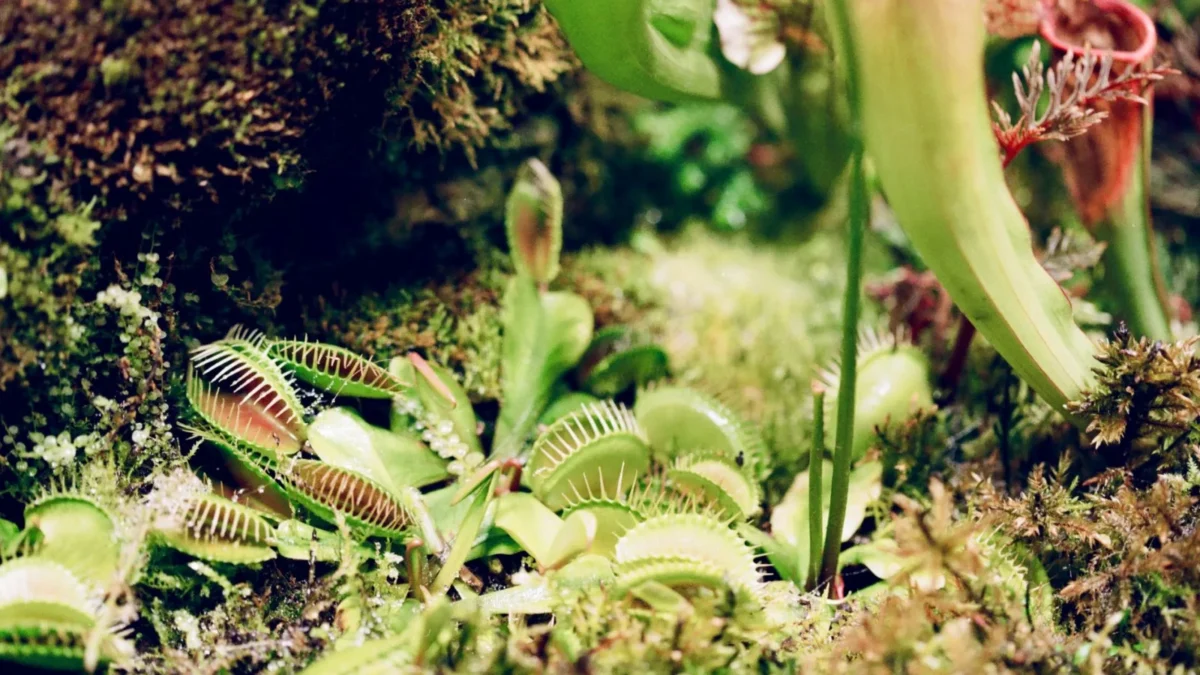
Quick answer: Venus Flytraps are non-toxic to cats and non-toxic to dogs, so they won’t poison your pets. However, a curious cat or dog can still damage the plant by chewing it, so it’s best kept out of reach.
| Botanical name | Dionaea muscipula |
|---|---|
| Light | Full sun to partial shade; 12 hours optimal; south or west-facing exposure |
| Watering | Rainwater only; sit in 1 cm water saucer spring/summer, ½ cm winter; water from below |
| Humidity | Above 50%; thrive with humidity despite adapting to drier climates |
| Temperature | 10–27°C (50–80°F); cool winter dormancy above 10°C required |
| Soil | Half sphagnum peat/moss, half coarse horticultural sand; nutrient-poor only |
| Feeding | Never use fertilizer; gets food from insects; nitrogen causes root burn |
| Size | Up to 10 cm tall; 2–6 inches maximum height |
| Difficulty | moderate |
| Cats | ✓ non-toxic |
| Dogs | ✓ non-toxic |
Are Venus Flytraps safe for cats?
Venus Flytraps do not produce harmful chemicals or toxins that affect cats. Your cat will come to no harm from nibbling or brushing against the plant. However, while the plant itself is safe, a cat chewing on it can still damage the plant, so keeping it in a location your cat cannot reach is still wise.
Are Venus Flytraps safe for dogs?
Venus Flytraps are completely non-toxic to dogs. You don’t need to worry about poisoning if your dog sniffs or chews on the plant. Like with cats, though, the main concern is protecting the plant from damage rather than protecting your pet from toxins.
FAQ
Can I keep a Venus Flytrap if I have pets?
Yes—Venus Flytraps are non-toxic to both cats and dogs, making them safe houseplants for homes with pets. Simply place them on a high shelf or in a room your pets cannot access to prevent damage to the delicate traps.
Read the full guide: Venus Flytrap Care: The Complete Guide
More about Venus Flytrap
The same problem in other plants
- Is Begonia Maculata Toxic to Cats and Dogs?
- Is Caladium Toxic to Cats and Dogs? Pet Safety Guide
- Is Rabbit's Foot Fern Toxic to Cats and Dogs?
- Is Satin Pothos Toxic to Cats, Dogs, and Humans?
Sources
- Toxic and Non-toxic Plants: Venus Fly Trap
- zoorithm.com
- Venus Fly Trap Care: Light, Water, Feeding and Dormancy
Photo: Elizaveta Mitenkova / Pexels, Pexels