Venus Flytrap Dionaea muscipula
Why Is My Venus Flytrap Droopy and Wilting
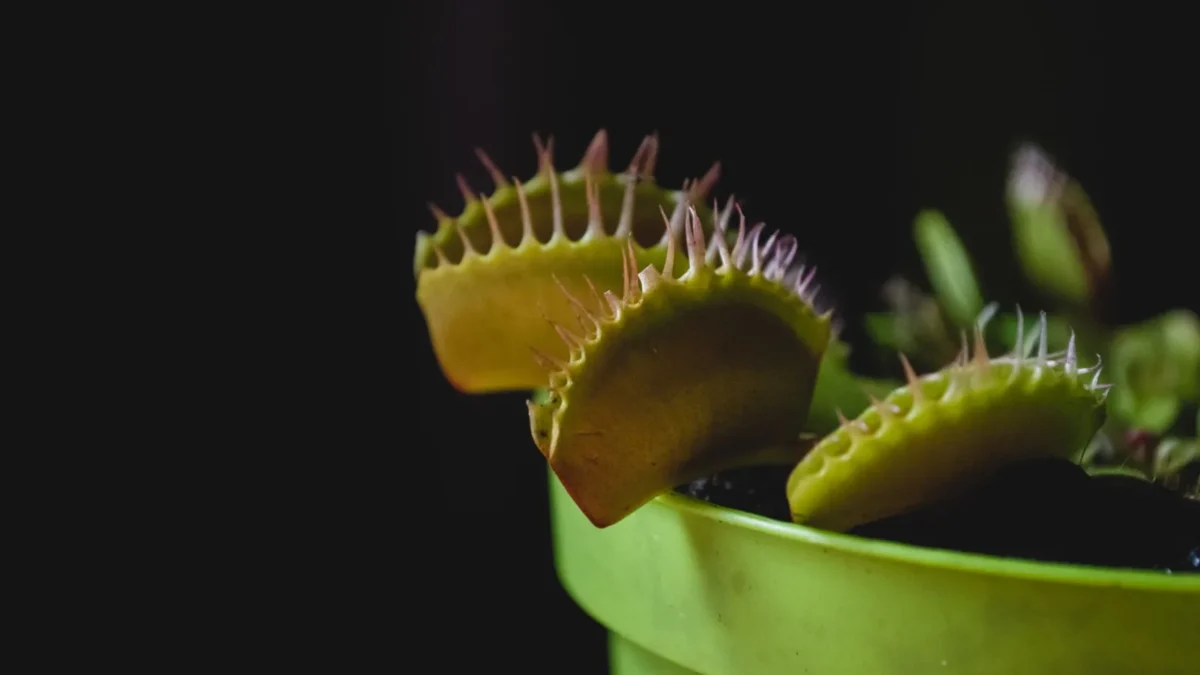
Quick answer: Your Venus Flytrap is drooping because of underwatering, overwatering, low humidity, insufficient light, or incorrect soil. The most common cause is watering problems—they need rainwater kept consistently moist from below, and tap water or standard potting soil will kill them quickly.
| Botanical name | Dionaea muscipula |
|---|---|
| Light | Full sun to partial shade; 12 hours optimal; south or west-facing exposure |
| Watering | Rainwater only; sit in 1 cm water saucer spring/summer, ½ cm winter; water from below |
| Humidity | Above 50%; thrive with humidity despite adapting to drier climates |
| Temperature | 10–27°C (50–80°F); cool winter dormancy above 10°C required |
| Soil | Half sphagnum peat/moss, half coarse horticultural sand; nutrient-poor only |
| Feeding | Never use fertilizer; gets food from insects; nitrogen causes root burn |
| Size | Up to 10 cm tall; 2–6 inches maximum height |
| Difficulty | moderate |
| Cats | ✓ non-toxic |
| Dogs | ✓ non-toxic |
| What you see | Likely cause | What to do |
|---|---|---|
| Crispy leaf edges, wilting, drooping | Underwatering | Increase watering; soil should feel moist but not soggy when squeezed |
| Yellowing leaves, mushy roots, drooping | Overwatering or poor drainage | Check roots for rot; ensure soil drains well; use water tray method |
| Pale, stretching leaves; drooping despite moisture | Insufficient light | Move to south or west-facing window with 12 hours of light daily |
| Droopy leaves during autumn/winter | Winter dormancy (normal) | Reduce watering to once every 2–4 weeks; this is natural |
| Wilting despite correct care | Wrong soil or mineral buildup | Repot in half sphagnum moss, half coarse horticultural sand |
| Drooping with fungal spots | High moisture + cold + humidity | Improve air circulation; reduce watering frequency |
Understanding why your Venus Flytrap droops
Drooping leaves signal that something in your plant’s care needs adjusting. Unlike most houseplants, Venus Flytraps have very specific needs, and even small mistakes cause visible stress.
Watering problems
The most common reason your Venus Flytrap is wilting relates to water. These bog plants must stay consistently moist, but the type of water matters enormously. Use rainwater only—tap water kills them because it contains minerals, salts and chlorine that accumulate in the soil.
Underwatering causes crispy edges and drooping. During the growing season (spring and summer), water every 1–2 weeks by sitting the pot in a saucer with 1 cm of water and letting it drink from below. In winter, reduce this to ½ cm. Test your soil by squeezing a small amount gently—it should feel moist but not release excess water when pressed.
Overwatering is equally damaging and more common indoors. It causes yellowing leaves, mushy roots, and drooping because the roots rot and cannot absorb nutrients. The water tray method prevents this by keeping soil moist without waterlogging it.
Light and humidity
If your plant receives less than 6 hours of light daily, leaves stretch, pale, and droop. Position your Venus Flytrap in a south or west-facing window. It needs at least 12 hours of light to thrive.
These plants evolved in humid bog environments and need humidity above 50% to perform well, even though they adapt to drier conditions. Low humidity combined with underwatering accelerates drooping.
Temperature and dormancy
Keep your Venus Flytrap between 10–27°C (50–80°F). During winter dormancy, droopy or black leaves are completely normal—the plant is resting. This cool period above 10°C is essential; without it, the plant exhausts itself and dies within one to two years.
Soil and mineral buildup
Wrong soil is one of the main reasons Venus Flytraps wilt. Use half sphagnum peat or moss and half coarse horticultural sand—nutrient-rich soil burns roots and kills the plant. Minerals left in soil after water evaporation cause root rot and wilting. Never use fertiliser; it causes mineral burn and leaf loss. Repot every 1–2 years to prevent mineral buildup.
How to revive a drooping Venus Flytrap
- Check the soil moisture by feeling it—it should be moist, not soggy or bone-dry.
- Inspect the roots for rot (dark, mushy tissue). If present, repot immediately in fresh carnivorous plant soil.
- Move the pot to a south or west-facing window with strong, indirect light.
- Switch to rainwater if you’ve been using tap water.
- Use the water tray method: sit the pot in a saucer with ½–1 cm of water depending on season.
- If winter is approaching, allow the plant to enter dormancy with reduced watering—droopy leaves during this time will recover in spring.
Most Venus Flytraps bounce back within 2–3 weeks of proper care.
Read the full guide: Venus Flytrap Care: The Complete Guide
More about Venus Flytrap
The same problem in other plants
- Why Is My Pencil Cactus Drooping or Dropping Branches?
- Why Are My Alocasia Frydek Leaves Drooping?
- Why Are My Caladium Leaves Drooping? How to Revive Them
- Why Is My Purple Shamrock Drooping and Wilting?
Sources
- Why Is My Venus Fly Trap Wilting or Drooping? Causes, Tips – Terrarium Planting Guide
- 🪰 How to Fix Droopy Leaves on Your Venus Flytrap
- Venus Flytrap Indoor Care Guide with Downloadable Care Sheet
Photo: Izabella Bedő / Pexels, Pexels