Fiddle Leaf Fig Ficus lyrata
Why Is My Fiddle Leaf Fig Dropping Leaves: Causes and How to Fix It
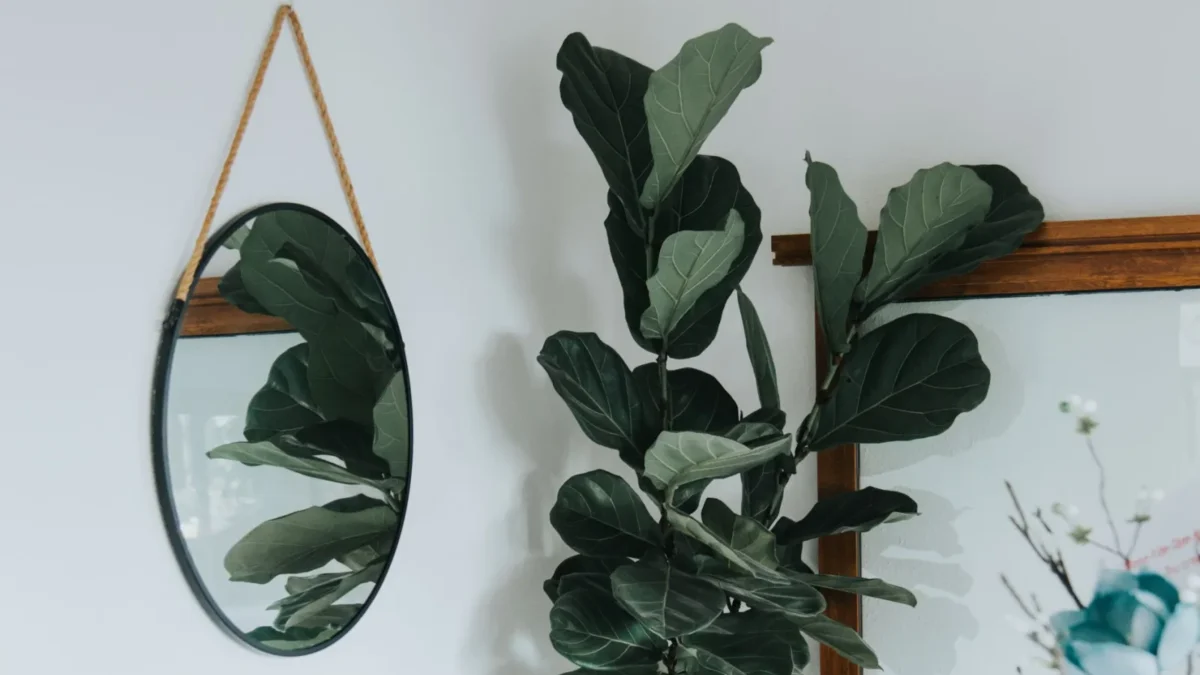
Quick answer: Your fiddle leaf fig is dropping leaves most likely due to low moisture at the roots, low humidity, cold or dry air, or temperature fluctuations. It’s also sensitive to inconsistent watering, poor light, or being moved to a new spot.
| Botanical name | Ficus lyrata |
|---|---|
| Light | Bright indirect light 6-8 hours daily; tolerates some direct sun, especially east-facing windows |
| Watering | Water every 7-10 days when top inch of soil is dry; reduce in winter to every 2-3 weeks |
| Humidity | 30-65%; ideally above 40% to prevent brown leaf tips |
| Temperature | 60-75°F (15-24°C); avoid below 50°F and above 95°F; sensitive to fluctuations |
| Soil | Well-draining peat-based potting mix with perlite; high in organic matter |
| Feeding | Every 6 months during spring and summer; use 3-1-2 N-P-K ratio; don't fertilize in winter |
| Size | 2-10 ft tall indoors; leaves up to 18 in long and 12 in wide |
| Difficulty | demanding |
| Cats | ⚠️ toxic — Mildly toxic; causes mild gastrointestinal irritation, vomiting, diarrhea |
| Dogs | ⚠️ toxic — Mildly toxic; causes mild gastrointestinal irritation, vomiting, diarrhea |
| What you see | Likely cause | What to do |
|---|---|---|
| Leaves drooping and falling off; yellowing | Too little water or dry roots | Check soil moisture and water thoroughly; maintain consistent watering every 7–10 days |
| Sudden leaf drop after moving house or location change | Temperature shock or environmental stress | Keep the plant in one stable location once positioned correctly; avoid moving it frequently |
| Drooping leaves with brown, crispy edges | Low humidity (below 40%) | Increase humidity with a misting bottle, pebble tray, or humidifier |
| Leaves turning brown and drooping | Temperatures above 95°F or below 50°F | Move away from heating vents and air conditioning; maintain 60–75°F |
| Slow leaf drop with weak new growth | Insufficient light | Provide 6–8 hours of bright, indirect light daily, ideally from an east-facing window |
How to tell what’s causing leaf drop
Fiddle leaf figs are demanding plants and react visibly when something is wrong. The key is matching what you see to the cause.
Watering problems are the most common reason. Water your fiddle leaf fig when the top inch of soil feels dry to the touch—don’t water if it’s still moist. During winter, water less often, every 2–3 weeks, as the plant slows down. The plant prefers a thorough soaking that drains completely, then a dry spell between waterings, mimicking its rainforest origins. Both overwatering and underwatering cause drooping; check the soil first to distinguish them.
Temperature shock is another major trigger. Fiddle leaf figs are extremely sensitive to sudden temperature changes and will drop leaves if exposed to draughts from air conditioning or heating vents. Keep the plant away from these sources and maintain temperatures between 60–75°F (15–24°C). Do not allow temperatures to fall below 50°F (10°C).
Low humidity causes drooping, brown leaf edges, and leaf curl. Aim to keep humidity above 40% to prevent brown tips and leaf drop. Use a pebble tray filled with water beneath the pot, mist the leaves regularly, or place a humidifier nearby.
Insufficient light weakens the plant and causes gradual leaf loss. Provide 6–8 hours of bright, indirect light daily. East-facing windows are ideal, and the plant can tolerate some direct sun.
Moving the plant is surprisingly stressful. Once you’ve found the right spot with proper light, temperature, and humidity, resist the urge to relocate it. Each move triggers leaf drop as the plant readjusts.
How to restore a drooping fiddle leaf fig
-
Check the soil moisture. Stick your finger 1 inch into the soil. If it’s dry, water thoroughly until water drains from the bottom. If it’s wet, hold off watering and check drainage—the soil may be waterlogged. Use a peat-based potting mix with perlite for proper drainage.
-
Adjust watering frequency. Water every 7–10 days when the top inch is dry. In winter, reduce to every 2–3 weeks. Consistency matters more than a strict schedule; let the soil guide you.
-
Increase humidity. If air is dry, mist the leaves daily or use a humidifier to raise humidity above 40%.
-
Move away from cold drafts and heat vents. Ensure the plant sits in a stable spot between 60–75°F (15–24°C) with no sudden temperature swings.
-
Provide enough light. Place the plant in bright, indirect light for at least 6–8 hours daily. If it’s in a dim corner, move it closer to a window.
-
Don’t repot immediately. Let the plant stabilize first. If roots are genuinely root-bound (visible circling the soil), repot every 1–3 years into fresh, well-draining peat-based soil.
How to prevent leaf drop
Once your fiddle leaf fig recovers, maintain stable conditions: consistent watering based on soil moisture, humidity above 40%, steady temperatures between 60–75°F, 6–8 hours of bright light daily, and a permanent home. Avoid moving the plant, keep it away from temperature extremes and drafts, and dust the large leaves regularly to support photosynthesis. Fertilize every 6 months during spring and summer with a 3-1-2 N-P-K fertilizer; skip winter feeding. These plants are fussy, but once their environment is dialled in, they reward you with glossy, dramatic foliage.
Read the full guide: Fiddle Leaf Fig Care: The Complete Guide
More about Fiddle Leaf Fig
The same problem in other plants
- Why Is My Rubber Plant Drooping and How to Fix It?
- Why Is My Peace Lily Drooping?
- Why Is My Monstera Drooping or Wilting?