Alocasia Frydek Alocasia micholitziana 'Frydek'
Why Are My Alocasia Frydek Leaves Drooping?
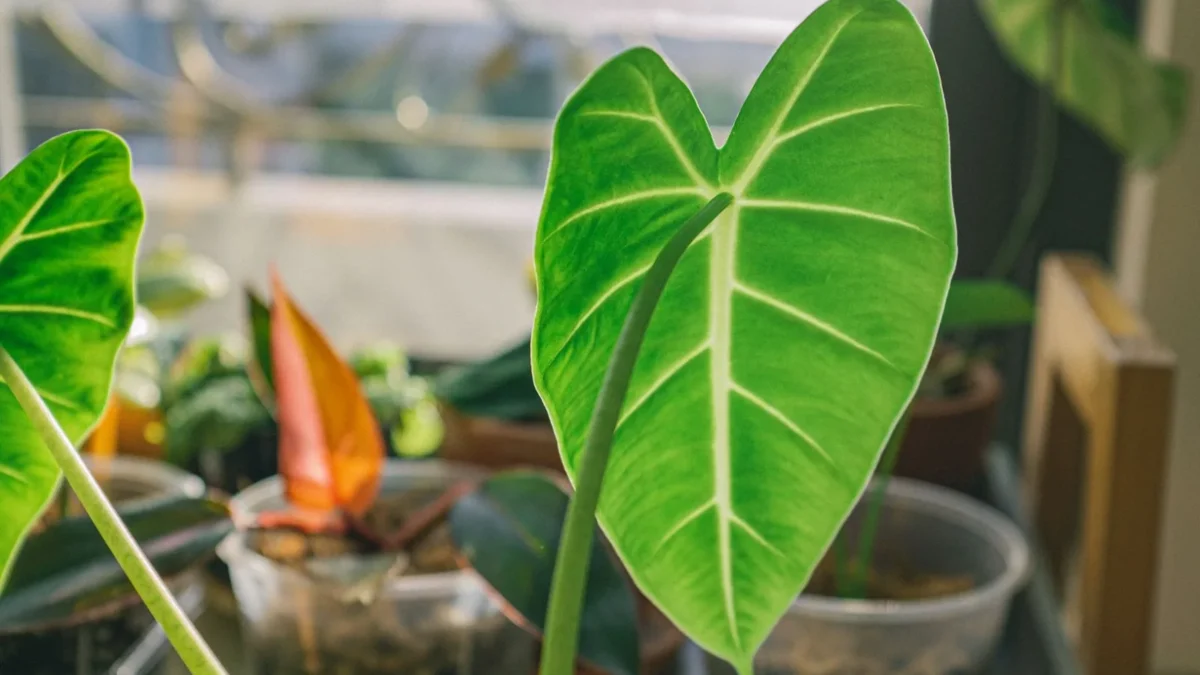
Quick answer: Alocasia Frydek leaves droop most often from improper watering—usually overwatering leading to root problems—or from low humidity and inconsistent conditions. Check whether the soil is waterlogged or the top inch is dry, then adjust accordingly. Humidity below 60% also causes drooping.
| Botanical name | Alocasia micholitziana 'Frydek' |
|---|---|
| Light | Bright indirect light (300–500 fc); avoid direct sun 10am–4pm to prevent leaf scorch |
| Watering | Water when top 2 in of compost dries; every 6 days in summer, 12 days in winter; reduce in dormancy |
| Humidity | At least 60%, ideally 80% |
| Temperature | 16–30°C (60–85°F); keep cooler and drier in winter when dormant |
| Soil | 2 parts peat-free houseplant compost + 2 parts orchid bark + 1 part perlite + 1 part horticultural charcoal; pH 5.5–6.5 |
| Feeding | Balanced liquid fertilizer diluted to half strength every 4–6 weeks during growing season; do not fertilize in winter |
| Size | 0.5–1 m height; 0.5–1 m spread; slow-growing, compact |
| Difficulty | demanding |
| Cats | ⚠️ toxic — Insoluble calcium oxalates cause oral irritation, swelling, drooling, vomiting |
| Dogs | ⚠️ toxic — Insoluble calcium oxalates cause oral irritation, swelling, drooling, vomiting |
| What you see | Likely cause | What to do |
|---|---|---|
| Soil stays wet 4+ days; lower leaves yellow; mushy stems or rhizome; sour smell | Overwatering or poor drainage | Let soil dry out; repot in fresh, well-draining mix; check rhizome firmness |
| Top inch of soil is bone dry; plant looks wilted | Underwatering | Water thoroughly when top 2 inches dry; every 6 days in summer, 12 days in winter |
| Leaves droop but soil feels right; air feels very dry | Low humidity (below 60%) | Increase humidity to at least 60%, ideally 80% |
| Stems thin and weak; leaves pale; slow growth | Insufficient light (below 300 fc) | Move to bright indirect light; avoid direct sun 10am–4pm |
| Sudden drooping after repotting or moving | Transplant shock or cold draft | Keep temperature 16–30°C; minimize disturbance; wait for recovery |
Overwatering is the main cause
Alocasia Frydek grows from a rhizome that is highly sensitive to excess moisture. Even brief periods of waterlogged soil can trigger early-stage root rot, which stops the plant from taking up water and causes leaves to droop.
Water only when the top 2 inches of compost has dried out. In summer, this usually means every 6 days; in winter, every 12 days. The soil should be evenly moist but never soggy.
If you suspect root rot, gently remove the plant and check the rhizome. A healthy rhizome is firm; a rotting one is soft, mushy, or black. If caught early, repot into fresh mix of 2 parts peat-free houseplant compost + 2 parts orchid bark + 1 part perlite + 1 part horticultural charcoal. This blend drains well while keeping the sensitive rhizome aerated and protected.
Humidity and light matter as much as watering
Low humidity causes leaf edges to crisp and drooping to worsen. Keep humidity at least 60%, ideally 80%. Mist the plant, place a humidifier nearby, or group it with other plants to raise moisture.
Weak light also leads to drooping: thin, elongated stems cannot hold up the heavy leaves well. Place your Frydek near bright east- or north-facing windows in bright indirect light (300–500 fc). Avoid direct sun between 10am and 4pm, which burns the velvety foliage.
Temperature matters too. Keep the plant between 16–30°C (60–85°F). In winter, it becomes dormant and needs to be cooler and drier.
Prevent drooping with consistent care
Check soil moisture before watering by pressing the top inch—it should feel slightly dry. Use water that has sat out overnight, since this plant is sensitive to chlorine and mineral salts. Refresh the potting mix every 1 to 2 years to prevent compaction, which restricts oxygen to the rhizome and triggers decline. During the growing season (spring and summer), feed with a balanced liquid fertilizer diluted to half strength every 4 to 6 weeks; skip feeding entirely in winter.
If your Alocasia Frydek is toxic to cats and dogs in your home—all parts contain insoluble calcium oxalates that cause oral irritation, swelling, and vomiting if chewed. Keep it out of reach and contact your vet or the ASPCA Poison Control Center at (888) 426-4435 (US) or Animal PoisonLine at 01202 509 000 (UK) if a pet ingests any part of the plant.
Read the full guide: Alocasia Frydek Care: The Complete Guide
More about Alocasia Frydek
The same problem in other plants
- Why Are Your Snake Plant Leaves Drooping and How to Fix It
- Why Is My Pothos Drooping and How to Fix It
- Why Is My Pencil Cactus Drooping or Dropping Branches?
- Why Are My Caladium Leaves Drooping? How to Revive Them