Alocasia Frydek Alocasia micholitziana 'Frydek'
Why Are My Alocasia Frydek Leaves Turning Yellow?
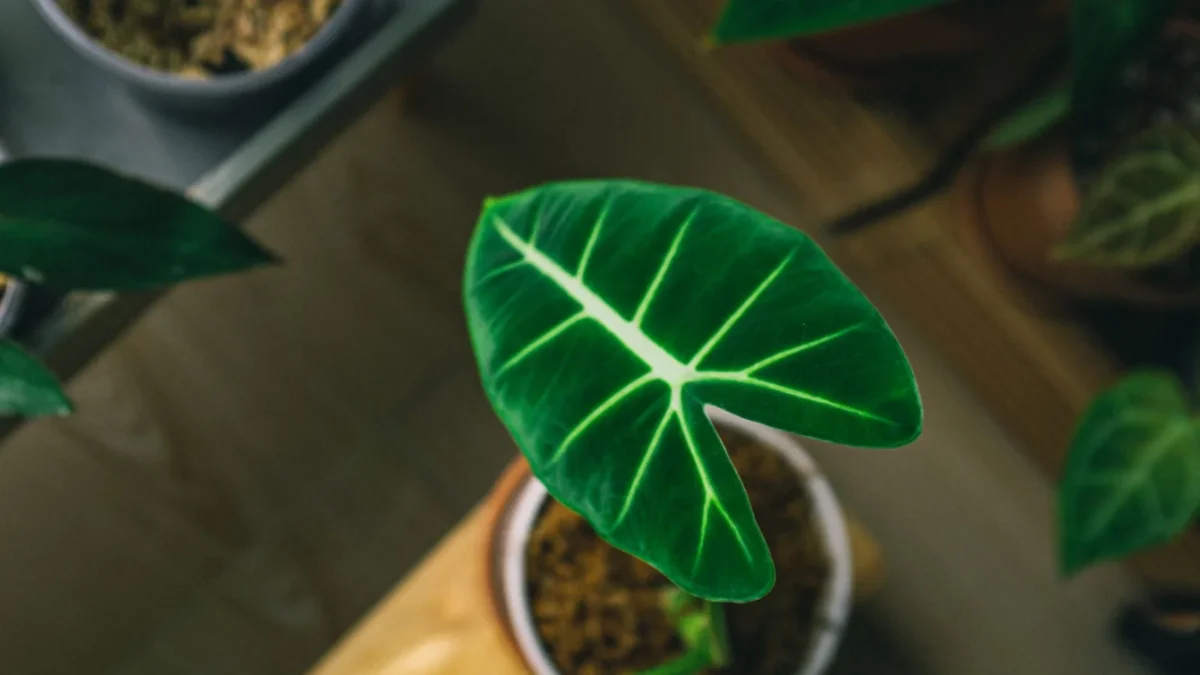
Quick answer: Alocasia Frydek leaves turn yellow most often from overwatering or poor drainage, but low humidity, insufficient light, nutrient deficiency, spider mites, and temperature stress also cause this problem. Each cause needs a different fix, so check your soil moisture and rhizome health first to identify which one is at play.
| Botanical name | Alocasia micholitziana 'Frydek' |
|---|---|
| Light | Bright indirect light (300–500 fc); avoid direct sun 10am–4pm to prevent leaf scorch |
| Watering | Water when top 2 in of compost dries; every 6 days in summer, 12 days in winter; reduce in dormancy |
| Humidity | At least 60%, ideally 80% |
| Temperature | 16–30°C (60–85°F); keep cooler and drier in winter when dormant |
| Soil | 2 parts peat-free houseplant compost + 2 parts orchid bark + 1 part perlite + 1 part horticultural charcoal; pH 5.5–6.5 |
| Feeding | Balanced liquid fertilizer diluted to half strength every 4–6 weeks during growing season; do not fertilize in winter |
| Size | 0.5–1 m height; 0.5–1 m spread; slow-growing, compact |
| Difficulty | demanding |
| Cats | ⚠️ toxic — Insoluble calcium oxalates cause oral irritation, swelling, drooling, vomiting |
| Dogs | ⚠️ toxic — Insoluble calcium oxalates cause oral irritation, swelling, drooling, vomiting |
| What you see | Likely cause | What to do |
|---|---|---|
| Soil stays wet 4+ days; lower leaves yellow first; sour smell; soft mushy stems | Overwatering or poor drainage | Repot into fresh soil mix with better drainage; water only when top 2 in dries; check that pot has drainage holes |
| Uniformly pale yellow leaves; veins stay green | Nutrient deficiency (nitrogen or magnesium) | Feed with balanced liquid fertilizer at half strength every 4–6 weeks during growing season |
| Yellow leaves with slow growth; pale, faded foliage | Insufficient light | Move closer to a bright east- or north-facing window; aim for bright indirect light |
| Fine webbing on leaves; yellow stippling or mottling | Spider mites | Increase humidity to at least 60%, ideally 80%; wipe leaves regularly with damp cloth |
| Occasional yellow older leaves; veins drain of color | Natural leaf aging | Remove the leaf; this is normal growth cycling |
| Yellow leaf edges and brown tips | Chlorine or mineral buildup in water | Switch to filtered or distilled water; Alocasias are sensitive to tap water |
How to identify and fix each cause
Overwatering and root rot are the most common reasons for yellowing. Water when the top 2 inches of compost dries. In summer, this is roughly every 6 days; in winter, every 12 days. If soil feels soggy, smells sour, or stems feel soft, repot immediately into the recommended soil mix: 2 parts peat-free houseplant compost + 2 parts orchid bark + 1 part perlite + 1 part horticultural charcoal. This blend drains well while keeping the sensitive rhizome aerated.
Low humidity makes Alocasia Frydek susceptible to spider mites, which suck sap and cause yellowing stippling. Keep humidity at least 60%, ideally 80%. Mist regularly or wipe leaves with a damp cloth to discourage pests and keep foliage healthy.
Poor lighting causes pale, faded leaves and slow growth. Position the plant near a bright window with indirect light. Avoid direct sun between 10 a.m. and 4 p.m., which causes irreversible leaf scorch.
Nutrient deficiency shows as uniformly pale yellow leaves while veins stay green—especially on older leaves. Feed every 4–6 weeks during the growing season with balanced liquid fertilizer diluted to half strength; do not feed in winter. Apply to moist soil to avoid burning the rhizome.
Temperature stress occurs if temperatures drop below 16°C (60°F) or above 30°C (85°F). In winter, keep the plant cooler and drier as it goes dormant; some leaf yellowing during this period is normal.
Chlorine and mineral salts in tap water can trigger yellowing. Use filtered water if your tap water is heavily treated.
Prevention
Refresh the potting mix every 1 to 2 years to prevent compacted, oxygen-starved soil around the rhizome. Maintain a mildly acidic soil pH of 5.5–6.5 to support healthy nutrient uptake. Allow the top inch to dry slightly between waterings—never let soil stay wet, as the rhizome is highly sensitive to excess moisture. Keep humidity high and provide bright, indirect light to maintain the plant’s rich green, velvety texture.
Read the full guide: Alocasia Frydek Care: The Complete Guide
More about Alocasia Frydek
The same problem in other plants
- Why Is My String of Turtles Turning Yellow?
- Why Is My Bamboo Palm Turning Yellow?
- Why Is My Maidenhair Fern Turning Yellow?
- Why Are My Caladium Leaves Turning Yellow?