Anthurium Anthurium andraeanum
Anthurium Care: The Complete Guide to Growing Healthy Anthuriums Indoors
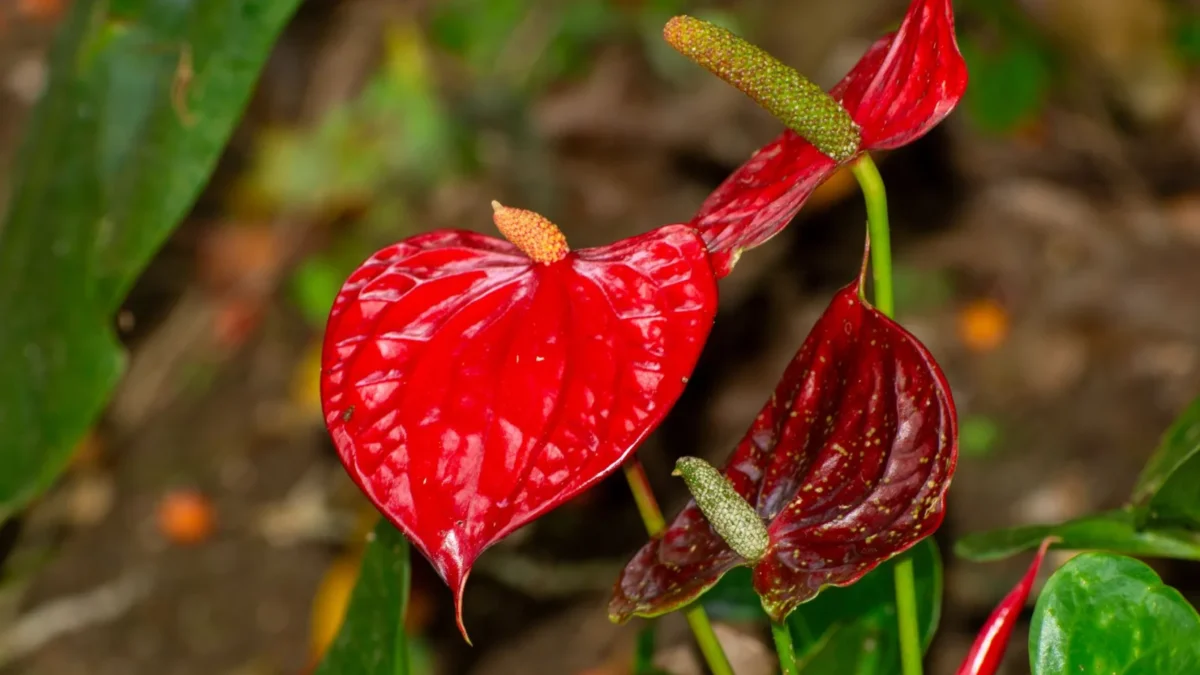
Anthuriums are exotic but surprisingly easy to care for, making them perfect for both beginner and experienced plant lovers. These flamboyant plants with their distinctive glossy leaves and long-lasting flowers thrive indoors when given the right conditions. This guide covers everything you need to know about anthurium care, from light and watering to humidity and fixing common problems.
| Botanical name | Anthurium andraeanum |
|---|---|
| Light | bright indirect light; avoid full sun |
| Watering | water when top inch of soil is dry; every 7-10 days spring/summer, 10-14 days fall/winter |
| Humidity | 70-80% humidity; high humidity needed |
| Temperature | 65-80°F (16-30°C); keep above 18°C |
| Soil | acidic potting mix: 2 parts ericaceous compost, 1 part orchid bark, 1 part perlite or grit |
| Feeding | orchid fertilizer every 2 weeks spring to autumn; phosphorus-rich for blooms |
| Size | 1-1.5 feet tall, 0.75-1 foot spread |
| Difficulty | easy |
Key points
- Anthuriums need bright indirect light; avoid full sun and dark rooms, as low light prevents blooming
- Water every 7–10 days spring/summer, every 10–14 days fall/winter—let the top inch of soil dry between waterings
- Maintain 70–80% humidity using a humidifier or pebble tray, as dry air causes brown leaf tips
- Use an acidic, chunky potting mix: 2 parts ericaceous compost, 1 part orchid bark, 1 part perlite
- Feed with orchid fertilizer every 2 weeks spring to autumn; choose phosphorus-rich formulas to encourage blooms
- Anthuriums are toxic to cats and dogs—keep them out of reach
Light Requirements for Anthurium
Anthuriums belong to the Araceae family and are native to Colombia and Ecuador, where they grow in dappled forest light. Indoors, they need bright indirect light to thrive. Provide part or diffused sun in summer, but avoid full sun, which can scorch the leaves.
Light directly affects both foliage and flowering. In too much shade, plants may not bloom at all. Brighter light means more abundant blooms, so position your anthurium near an east or west-facing window with sheer curtains, or a few feet back from a sunny window. If your room is too dark, your plant will not only fail to flower but may also develop pale, weak leaves that struggle with photosynthesis.
Watering Your Anthurium
Watering is where many anthurium growers go wrong. The key is consistency and the moisture checkpoint method: water when the top inch of soil is dry. In spring and summer, this typically means watering every 7–10 days; in fall and winter, extend the interval to every 10–14 days as growth slows.
To check soil moisture, stick your finger about an inch deep into the soil. If it feels dry at that depth, water thoroughly until water drains from the bottom. If it still feels moist, wait another day or two before checking again. Never let the pot sit in standing water.
Overwatering is the most common cause of problems in anthuriums. When roots sit in water for too long, they suffocate and rot, leading to yellow leaves. Anthuriums recover quickly from brief drought but suffer cumulatively from chronic overwatering—root rot is the leading cause of decline. If your plant’s soil is overly moist and leaves are yellowing, allow it to dry out completely before watering again and reduce watering frequency.
Humidity and Temperature
Humidity
Anthuriums need high humidity to stay healthy and vibrant. The ideal range is 70–80%, which is well above the ambient humidity in most homes. This is one of the most important factors in keeping your plant thriving indoors.
Low humidity causes brown, crispy leaf tips and edges. Dry indoor air, especially during colder months when heating or air conditioning is running, causes water to evaporate too quickly from leaf surfaces. To increase humidity, use a humidifier or set the pot on a wet pebble tray (a saucer filled with pebbles and water—rest the pot on the pebbles, not in the water). Misting helps temporarily, but a humidifier is the most reliable solution.
Brown leaf tips can also signal low humidity or salt buildup from hard water. Raise humidity, use filtered or rainwater, and flush the soil periodically to remove excess minerals.
Temperature
Anthuriums prefer warm temperatures between 65–80°F (16–30°C). Keep your plant above 18°C year-round. Avoid placing it near cold drafts, air conditioning vents, or heating radiators, as temperature fluctuations stress the plant.
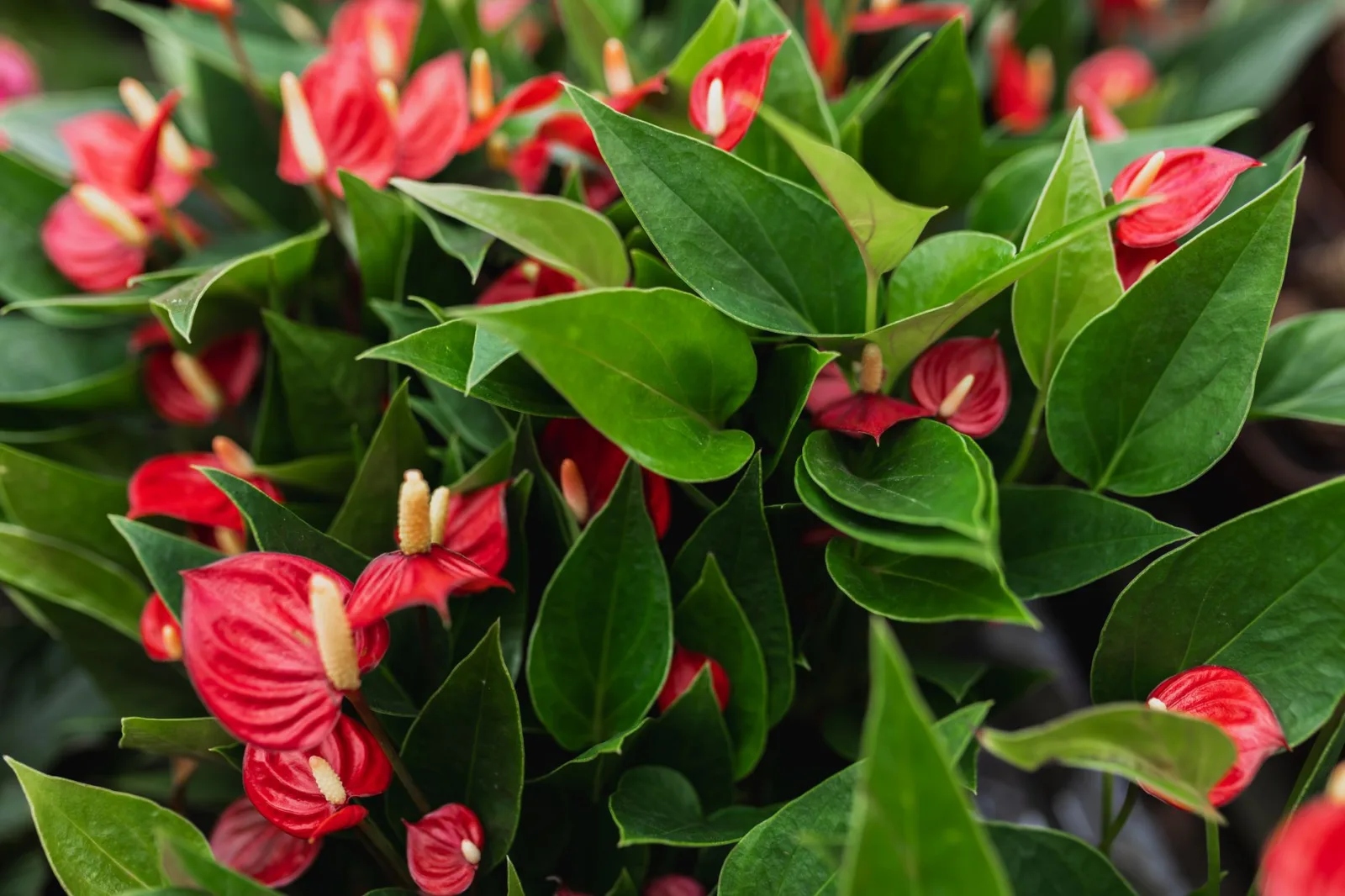
Soil and Repotting
Soil quality directly impacts drainage and root health. Use an acidic potting mix of two parts ericaceous peat-free compost, one part orchid bark, and one part perlite or horticultural grit. This chunky, open mix allows water to drain quickly while still retaining enough moisture for the roots to absorb.
Dense soil that stays too wet suppresses blooming even when foliage looks healthy; a chunky, well-draining mix encourages new flowers. Never use standard multipurpose compost, which holds too much water and promotes root rot.
Repot your anthurium every 12–18 months, or when you see roots emerging from the drainage hole. Spring is the best time. Choose a pot only 1–2 inches larger than the current one, and ensure it has drainage holes. Water well after repotting to settle the soil.
Feeding and Fertilizer
Anthuriums need regular feeding during their active growing season to maintain healthy foliage and encourage blooms. Apply an orchid fertilizer every 2 weeks from spring to autumn. Choose a phosphorus-rich formula to encourage long-lasting flowers.
If leaves turn pale yellow and you haven’t fertilized in months, apply a liquid or granular fertilizer to amend soil nutrition. Lack of nitrogen causes older leaves to yellow, while iron deficiency makes new leaves pale with green veins.
Stop feeding in late autumn and winter when growth slows. Over-fertilization causes “fertilizer burn,” where excess salts accumulate in the soil, drawing moisture from roots and concentrating in leaf tips with a burnt appearance.
Pruning and Maintenance
Anthurium maintenance is minimal. Remove dead leaves or flower stems at the base with clean scissors. This keeps the plant neat and encourages fresh growth. Wipe dust from leaves occasionally with a soft, damp cloth to keep pores open for photosynthesis.
Propagating Anthurium
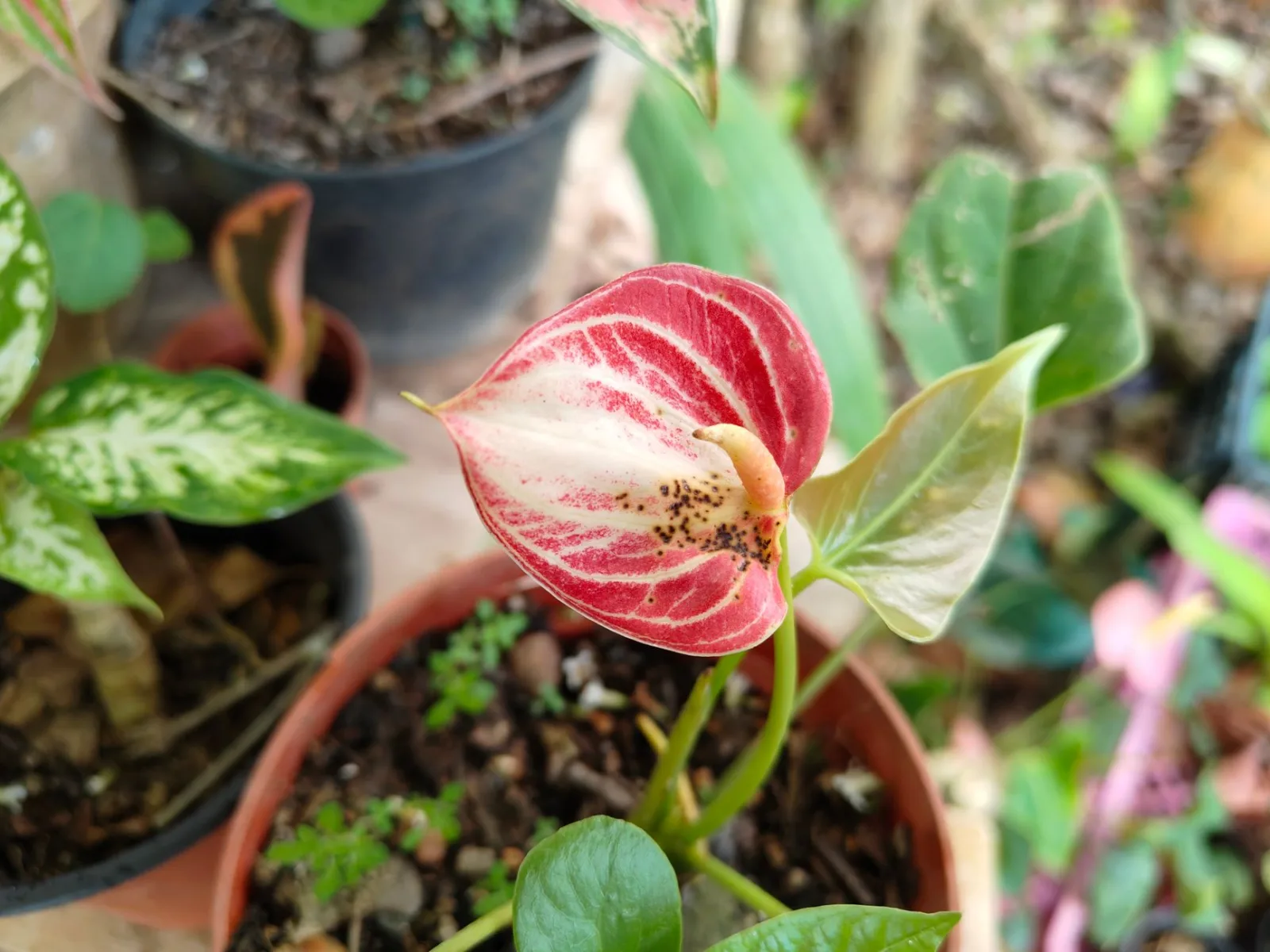
Anthuriums propagate easily by division, making it simple to create new plants. The best time is spring when you repot. Gently remove the plant from its pot and carefully separate the stems, ensuring each division has its own roots and at least one or two stems. Plant each division in moist, well-draining soil and keep it in bright, indirect light. New growth should emerge within a few weeks.
Common Problems and Solutions
Yellow Leaves
Yellowing is most commonly a sign of overwatering and root rot. Allow the soil to dry out completely and reduce watering frequency. If the soil is dry but leaves are still pale yellow, the problem may be nutritional—apply fertilizer to correct nitrogen or iron deficiencies. Incorrect light also contributes; plants in too much shade develop pale, weakened foliage.
Brown Leaf Tips
Brown, crispy leaf tips are most often caused by low humidity or salt buildup from hard water. Increase humidity using a humidifier or pebble tray, switch to filtered or rainwater, and flush the soil every 1–2 months to remove excess salts. Alternating between too much and too little water also stresses the plant, causing brown tips and edges. Check soil moisture frequently and water only when the top inch is dry.
Lack of Blooms
Inconsistent watering, low light, or dense soil that stays too wet suppress blooming even when foliage looks healthy. Ensure your plant receives bright indirect light, use a chunky, well-draining potting mix, and maintain consistent watering (moist but not waterlogged). Provide high humidity and phosphorus-rich fertilizer spring through autumn to encourage flowers.
Plant Size
Indoor anthuriums typically grow to 1–1.5 feet tall with a spread of 0.75–1 foot, making them ideal for desks, shelves, or side tables without overwhelming the space.
Pet Safety
Anthuriums are toxic to both cats and dogs. Every part of the plant, including roots, stems, leaves, flowers, and seeds, poses a risk of toxicity. The plant contains insoluble calcium oxalate crystals, which can cause oral irritation, pain, swelling, excessive drooling, vomiting, and difficulty swallowing. Keep your anthurium out of reach of pets and children.
FAQ
How often should I water my anthurium?
Water every 7–10 days in spring and summer, and every 10–14 days in fall and winter, checking that the top inch of soil is dry before watering. Use your finger to test soil moisture about an inch deep.
Can I use tap water on my anthurium?
Anthuriums prefer rainwater or filtered water rather than tap water, as the chlorine, fluoride, and minerals in tap water can accumulate in the soil and foliage, causing brown tips. If tap water is your only option, let it sit in a jug overnight to allow some chlorine to evaporate.
Why isn’t my anthurium blooming?
Inconsistent watering, low light, or dense soil suppress blooming. Ensure bright indirect light, use a chunky well-draining mix, water consistently (but don’t overwater), and feed with phosphorus-rich orchid fertilizer every 2 weeks spring to autumn. Brighter light encourages more abundant blooms.
How do I increase humidity for my anthurium?
Use a humidifier or set the pot on a wet pebble tray. The ideal humidity range is 70–80%, which you can monitor with an inexpensive hygrometer.
Is anthurium toxic to pets?
Yes, anthuriums are toxic to both cats and dogs. The plant contains calcium oxalate crystals that cause oral irritation, swelling, drooling, vomiting, and difficulty swallowing. Keep it out of reach of pets and children.
When should I repot my anthurium?
Repot every 12–18 months, or when roots emerge from drainage holes, preferably in spring. Use a pot only 1–2 inches larger than the current one and fresh acidic potting mix for best results.
More about Anthurium
Sources
- Anthurium Plant Common Problems and their Solutions
- Anthurium andraeanum – Plant Finder
- Anthurium andraeanum
Photo: William ZALI / Pexels, Pexels