Anthurium Anthurium andraeanum
Why Are My Anthurium Leaves Turning Yellow? Common Causes and Fixes
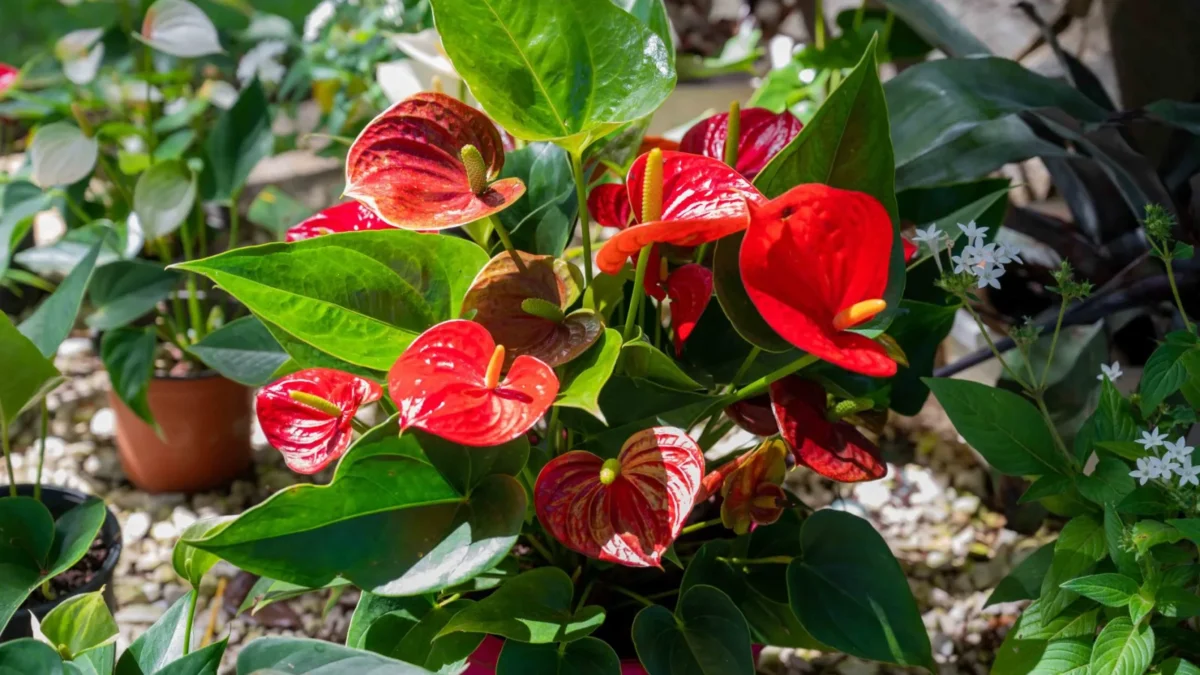
Quick answer: Anthurium leaves turning yellow is most commonly a sign of overwatering, which leads to root rot. However, poor drainage, low light, or nutrient deficiency can also cause yellowing. By identifying which problem your plant faces, you can fix it and restore healthy green leaves.
| Botanical name | Anthurium andraeanum |
|---|---|
| Light | bright indirect light; avoid full sun |
| Watering | water when top inch of soil is dry; every 7-10 days spring/summer, 10-14 days fall/winter |
| Humidity | 70-80% humidity; high humidity needed |
| Temperature | 65-80°F (16-30°C); keep above 18°C |
| Soil | acidic potting mix: 2 parts ericaceous compost, 1 part orchid bark, 1 part perlite or grit |
| Feeding | orchid fertilizer every 2 weeks spring to autumn; phosphorus-rich for blooms |
| Size | 1-1.5 feet tall, 0.75-1 foot spread |
| Difficulty | easy |
| What you see | Likely cause | What to do |
|---|---|---|
| Yellow leaves, soggy soil | Overwatering and root rot | Stop watering, let soil dry out completely, reduce watering frequency |
| Pale yellow leaves overall, healthy soil | Nutrient deficiency | Apply fertilizer to restore nutrition |
| Pale or yellowing new leaves with green veins | Iron deficiency | Apply iron-rich fertilizer or check soil pH |
| Yellow leaves in low-light location | Insufficient light | Move to bright, indirect location |
| Yellowing lower leaves only | Normal aging | Remove dead leaves; continue routine care |
Overwatering and root rot
Overwatering is the most common cause of yellow anthurium leaves. When roots sit in water for too long, they suffocate and start to rot, and the plant cannot absorb nutrients or water properly, causing yellowing throughout the foliage.
How to fix it:
- Stop watering immediately and allow the soil to dry out completely before watering again.
- Reduce your watering frequency going forward. Water only when the top inch of soil is dry. In spring and summer, this usually means every 7–10 days; in fall and winter, every 10–14 days.
- Ensure your pot has drainage holes and never let it sit in standing water.
- Consider repotting into fresh, well-draining soil if the current mix feels dense or stays waterlogged.
Nutrient deficiency
If your anthurium leaves are pale yellow and you haven’t fertilized in months, nutrient deficiency is likely. The type of yellowing can tell you which nutrient is missing: older leaves yellowing indicates lack of nitrogen, while new leaves that are pale with green veins suggest iron deficiency.
How to fix it:
Apply an orchid fertilizer every 2 weeks from spring to autumn. For better blooms, choose a phosphorus-rich fertilizer. Resume regular feeding to restore vigor and color.
Insufficient light
If leaves aren’t receiving enough light, they grow pale and problems with photosynthesis develop. Your anthurium may also stop flowering in dim conditions.
How to fix it:
Move your plant to a location with bright, indirect light. Avoid full sun, which can scorch the leaves, but ensure the plant receives adequate daylight to support healthy photosynthesis and encourage blooming.
Preventing yellow leaves
Check soil moisture frequently by inserting your finger about an inch deep—if it feels dry, water; if it feels wet, wait. Use a well-draining potting mix of two parts ericaceous compost, one part orchid bark, and one part perlite or grit. Provide bright, indirect light and maintain humidity between 70–80%. These consistent conditions will keep your anthurium thriving with green foliage.
Why are my anthurium leaves still yellowing after I’ve watered less?
If reducing water doesn’t help, check that your pot has drainage holes and the soil mix is chunky and fast-draining rather than dense. Dense soil that stays wet suppresses plant health even with less frequent watering.
Can I save a severely yellowed anthurium?
Yes. Once you identify and fix the cause—better drainage, correct watering, adequate light, or feeding—new growth will emerge healthy. Remove dead leaves at the base to redirect energy to new foliage.
Read the full guide: Anthurium Care: The Complete Guide
More about Anthurium
The same problem in other plants
- Why Are My Monstera Adansonii Leaves Turning Yellow?
- Why Is My Philodendron Birkin Turning Yellow?
- Why Are My Croton Leaves Turning Yellow and Falling Off?
- Why Are My African Violet Leaves Turning Yellow?
Sources
- Anthurium andraeanum
- Anthurium Andraeanum Plant Care Guide
- Anthurium Plant Common Problems and their Solutions
Photo: William ZALI / Pexels, Pexels