Anthurium Anthurium andraeanum
How to Propagate Anthurium: A Step-by-Step Guide
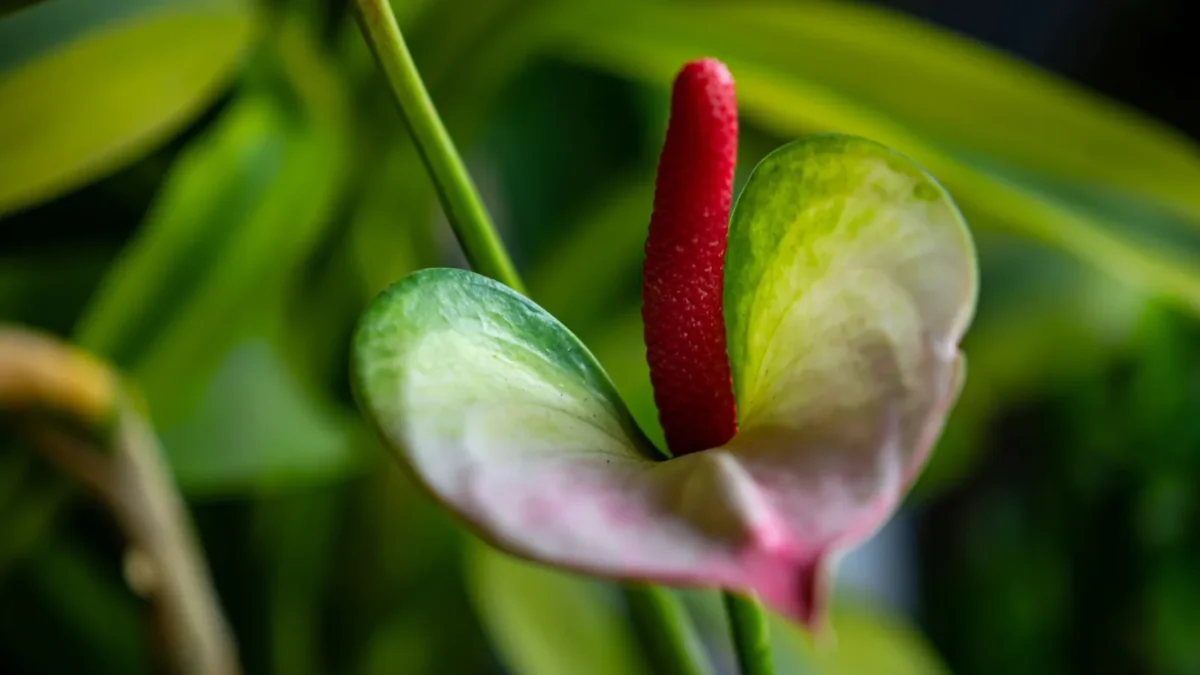
Quick answer: Here’s how to do it: Anthurium propagates easily by division, which is the quickest and most reliable method. You can also propagate from stem cuttings in water or soil, though results vary. This guide covers all three techniques so you can expand your collection with minimal effort.
| Botanical name | Anthurium andraeanum |
|---|---|
| Light | bright indirect light; avoid full sun |
| Watering | water when top inch of soil is dry; every 7-10 days spring/summer, 10-14 days fall/winter |
| Humidity | 70-80% humidity; high humidity needed |
| Temperature | 65-80°F (16-30°C); keep above 18°C |
| Soil | acidic potting mix: 2 parts ericaceous compost, 1 part orchid bark, 1 part perlite or grit |
| Feeding | orchid fertilizer every 2 weeks spring to autumn; phosphorus-rich for blooms |
| Size | 1-1.5 feet tall, 0.75-1 foot spread |
| Difficulty | easy |
How to propagate anthurium by division
Division is the best way to propagate anthurium because each separated plant establishes quickly with its own roots already formed.
- Water your anthurium thoroughly the day before division to reduce transplant shock.
- Remove the plant from its pot and gently tease apart the soil with your fingers to reveal the root system.
- Identify natural clusters or stems with their own root sections.
- Use a clean knife or pruners to separate each section, ensuring each has at least one stem and several roots attached.
- Pot each division into a container with fresh acidic potting mix—use two parts ericaceous compost, one part orchid bark, and one part perlite or grit.
- Water thoroughly and place in bright, indirect light.
- Maintain warm conditions between 65–80°F.
New roots and shoots typically develop within 2–4 weeks. Keep soil consistently moist but not waterlogged during establishment.
How to propagate anthurium from cuttings in water
Water propagation works for stem cuttings and lets you monitor root development visually.
- Cut a 4–6 inch stem just below a node (the bumpy joint where leaves attach) using clean pruners.
- Remove the lower leaves, leaving 2–3 leaves at the top.
- Place the cutting in a glass of room-temperature, filtered or rainwater.
- Position in bright, indirect light.
- Change the water every 3–5 days to prevent bacterial growth.
- Once roots reach about 1 inch long, transfer to moist potting mix in a small pot.
Root development takes 4–8 weeks. Cuttings are more unpredictable than division—some fail to root, so take multiple cuttings to increase success. Maintain high humidity (70–80%) around new plants and water when the top inch of soil is dry.
Growing anthurium from cuttings in soil
Direct soil propagation skips the water stage and works for growers who prefer faster establishment.
- Take a 4–6 inch cutting just below a node, removing lower leaves.
- Dip the cut end lightly in rooting hormone (optional but helpful).
- Insert into moist acidic potting mix in a small pot with drainage holes.
- Tent loosely with a plastic bag to raise humidity without creating stagnant air.
- Keep soil consistently moist, not soggy, and provide bright, indirect light.
- Check daily and remove the bag for 30 minutes to allow air circulation.
Roots usually form in 4–8 weeks. Once new growth appears, gradually remove the plastic tent and treat as an established plant.
FAQ
How long does it take to propagate anthurium?
Division produces the fastest results, with new growth visible within 2–4 weeks because separated plants already have roots. Cuttings in water or soil typically root in 4–8 weeks.
Can I propagate anthurium from leaves?
Leaf cuttings alone rarely succeed with anthurium. Always include a section of stem with at least one node for the best chance of rooting.
What humidity should new propagations have?
Maintain 70–80% humidity around newly propagated plants to reduce stress and encourage root and shoot development. Use a humidifier or set pots on a pebble tray filled with water for consistent moisture in the air.
Read the full guide: Anthurium Care: The Complete Guide
More about Anthurium
The same problem in other plants
- How to Propagate Arrowhead Plant: Water and Soil Methods
- How to Propagate Croton from Cuttings and Leaves
- How to Propagate Bromeliads from Pups: Step-by-Step Guide
- How to Propagate African Violets from Leaves
Sources
Photo: Manish Sharma / Pexels, Pexels