Anthurium Anthurium andraeanum
Why Is My Anthurium Not Flowering? Top Causes and How to Fix It
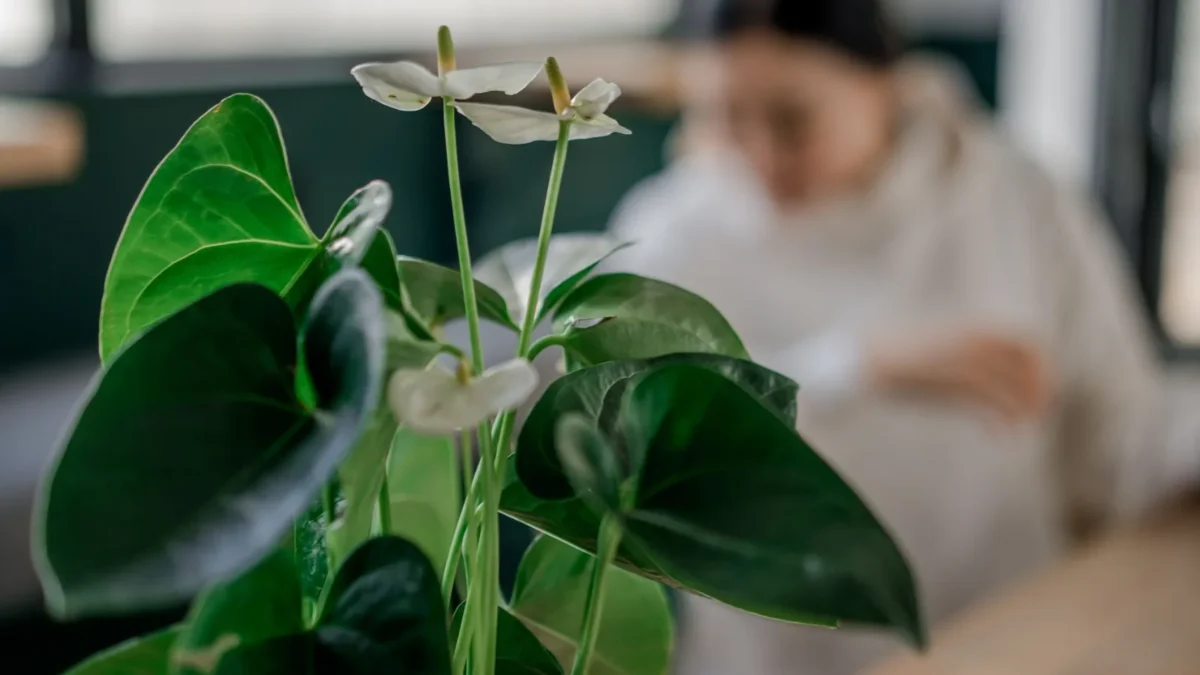
Quick answer: Anthuriums stop flowering mainly due to too little light, cold temperatures, inconsistent watering, or dense soil that stays wet. Bright indirect light, warm conditions (65–80°F), consistent moisture with excellent drainage, and a phosphorus-rich fertiliser will encourage new blooms.
| Botanical name | Anthurium andraeanum |
|---|---|
| Light | bright indirect light; avoid full sun |
| Watering | water when top inch of soil is dry; every 7-10 days spring/summer, 10-14 days fall/winter |
| Humidity | 70-80% humidity; high humidity needed |
| Temperature | 65-80°F (16-30°C); keep above 18°C |
| Soil | acidic potting mix: 2 parts ericaceous compost, 1 part orchid bark, 1 part perlite or grit |
| Feeding | orchid fertilizer every 2 weeks spring to autumn; phosphorus-rich for blooms |
| Size | 1-1.5 feet tall, 0.75-1 foot spread |
| Difficulty | easy |
Inadequate Light Is the Most Common Problem
If your anthurium is not flowering, the first thing to check is light. Without enough light, your plant may have plenty of healthy green leaves but produce no flowers at all. Anthuriums enjoy bright dappled light or bright indirect light, and brighter light means more abundant blooms. Avoid full sun, but don’t let your plant live in shade—this suppresses flowering.
Move your anthurium closer to a bright window, ideally north or east-facing in the US or UK where the sun is gentler. If natural light is limited, a grow light positioned above the plant for 12 hours daily can trigger blooming within weeks.
Soil, Water, and Temperature Matter for Flowering
Inconsistent watering, low light, or dense soil that stays too wet all suppress blooming even when foliage looks healthy; bright indirect light and a chunky, well-draining mix encourage new spathes. Use the soil mix designed for anthuriums: two parts ericaceous peat-free compost, one part horticultural grit and one part orchid bark. This prevents waterlogging, which kills flower production.
Water every 7–10 days in spring and summer when the top inch of soil is dry; fall and winter: every 10–14 days. Stick your finger into the soil about an inch deep to determine when to water; if the soil is dry at this depth, it’s time to water. Cold roots also stop flowering— these plants like warm temperatures between 65–80°F, so keep them away from drafts, air conditioning, and cold windowsills.
Fertiliser Type and Humidity
Your anthurium demands a phosphorus-rich fertiliser to encourage the long-lasting blooms. Apply an orchid fertiliser every 2 weeks from spring to autumn. Too much nitrogen-heavy fertiliser can encourage leaf growth at the expense of flowers, so stick to orchid or flowering plant formulas.
Humidity also supports blooming. High humidity is needed, ranging between 70–80%. Mist your plant regularly or set the pot on a wet pebble tray to boost humidity around the leaves and flowers.
FAQ
How long does it take for an anthurium to start flowering again?
Once you fix the root cause—usually light, soil, or fertiliser—you should see new flower buds form within 4–8 weeks, depending on the season and how long the problem persisted.
Can I use regular houseplant fertiliser instead of orchid fertiliser?
Your anthurium demands a phosphorus-rich fertiliser to encourage the long-lasting blooms. Regular houseplant fertiliser is often higher in nitrogen, which promotes foliage rather than flowers, so orchid or flowering plant fertiliser works much better for blooming.
Read the full guide: Anthurium Care: The Complete Guide
More about Anthurium
The same problem in other plants
- Will Your Monstera Flower Indoors? What You Need to Know
- Why Isn't Your Kalanchoe Flowering and How to Fix It
- Why Is My Bromeliad Flower Turning Brown and Losing Color?
- Why Isn't Your African Violet Blooming? Causes and Solutions