Croton Codiaeum variegatum
Why Are My Croton Leaves Turning Yellow and Falling Off?
Quick answer
Quick answer: Croton leaves turning yellow and falling off is usually caused by overwatering and root rot, cold temperatures below 50°F, sudden temperature changes, or insufficient light. Each has a distinct look, and each fix is different—so identifying which one you’re dealing with is the first step to saving your plant.
| Botanical name | Codiaeum variegatum |
|---|---|
| Light | Bright indirect light; tolerates medium light but loses vibrant color; avoid full summer sun to prevent scorching |
| Watering | Water every 5-7 days spring/summer, 7-14 days fall/winter when top inch of soil is dry; use filtered or rainwater at roo |
| Humidity | 60-80% humidity; high humidity essential to prevent leaf drop and maintain foliage vibrancy |
| Temperature | 60-80°F (15-27°C) optimal; keep warm; below 50°F causes leaf drop; avoid cold drafts and sudden temperature changes |
| Soil | Peat-free, loam-based potting compost; acidic soil preferred; ensure good drainage to prevent waterlogging |
| Feeding | Monthly with liquid houseplant food diluted to half strength during spring and summer growing season |
| Size | 30-90 cm (1-3 ft) tall as a houseplant |
| Difficulty | moderate |
| What you see | Likely cause | What to do |
|---|---|---|
| Yellow, mushy lower leaves that come off easily; sour-smelling soil; dark brown-black roots | Root rot | Repot immediately into fresh, dry peat-free compost with good drainage. Remove mushy roots. Water less frequently—every 7–14 days in winter. |
| Leaves soft and droopy, then crispy yellow; very dry, powdery soil | Underwatering | Water thoroughly when the top inch of soil is dry. Use the finger test: stick a finger 1 inch in; if dry, water. In spring and summer, water every 5–7 days. |
| Yellow leaves with blotchy brown patches after a cold draft or near AC vent | Cold draft damage | Move the plant away from drafts, AC vents, and open windows. Keep it between 60–80°F. Avoid cold tap water; use room-temperature filtered or rainwater instead. |
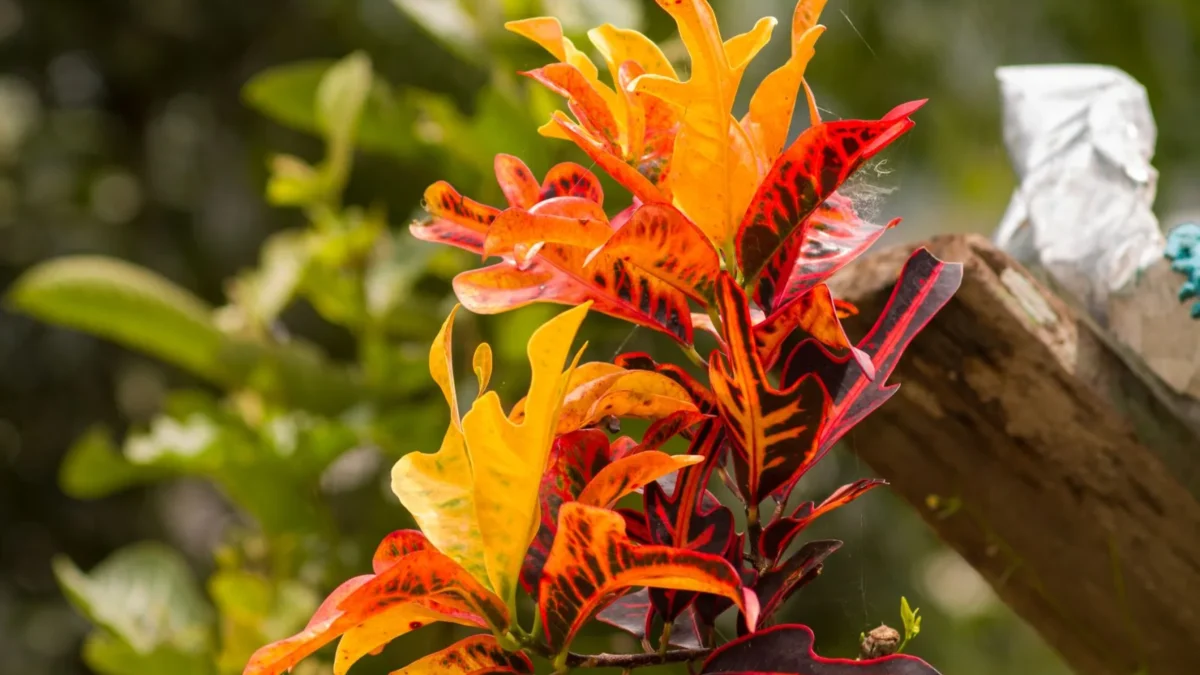
| Leaves lose vibrant color and drop in dim corners | Low or medium light | Move to bright indirect light. Avoid full summer sun, which can scorch leaves. Bright light preserves the plant’s dramatic red and gold colors. |
| Sudden leaf drop after bringing the plant home | Transplant shock | This is normal. The plant will adjust in 3–4 weeks and grow new leaves. Keep conditions stable and don’t panic. |
Overwatering and root rot
Overwatering is the most common killer of crotons. When soil stays wet, roots suffocate and rot—and once that starts, yellow mushy lower leaves will appear, along with a sour smell from the soil.
To fix it:
- Take the plant out of its pot and inspect the roots. Dark brown-black, mushy roots confirm root rot.
- Remove all soft, rotted roots with clean scissors.
- Repot into fresh peat-free, loam-based potting compost with good drainage.
- Water only when the top inch of soil is dry. In spring and summer, that’s roughly every 5–7 days; in fall and winter, every 7–14 days.
- Ensure the pot has drainage holes and don’t let water sit in a saucer.
Underwatering and temperature stress
Underwatering causes soft, droopy leaves that turn crispy and yellow before dropping. If the soil is very powdery and dry, underwatering is the culprit.
Cold temperatures are another major cause. Crotons perform best between 60–85°F. Below 50°F, leaves drop—and unlike many houseplants, crotons cannot gradually harden off to cold. Even brief exposure to cold drafts from windows or AC vents causes yellow leaves with brown blotches.
To fix underwatering:
– Water thoroughly when the top inch is dry, using the finger test.
– Use room-temperature filtered or rainwater, never cold tap water.
– In spring and summer, water every 5–7 days. In fall and winter, every 7–14 days.
To fix temperature stress:
– Keep the plant away from AC vents, open windows, and drafts.
– Maintain temperatures between 60–80°F (15–27°C) consistently.
– Avoid sudden temperature swings.
Light and humidity
Crotons need bright, indirect light to keep their vibrant color. In insufficient light, leaves lose their vivid reds and golds and may drop. Too much direct summer sun scorches leaves and turns them gray and dull.
Low humidity also causes leaf drop. Crotons thrive at 60–80% humidity, mimicking their tropical origin. Dry air causes leaf drop and brown leaf tips.
To prevent leaf drop from light or humidity issues:
– Place your croton in bright, indirect light away from scorching summer sun.
– Mist the leaves regularly or place the pot on a pebble tray filled with water to raise humidity around the plant.
– If the air is very dry, consider a humidifier.
FAQ
Can a newly purchased croton drop leaves even with proper care?
Yes—transplant shock is completely normal. When crotons move from the greenhouse to your home, they often drop some or all leaves as they adjust to new conditions. The plant will begin producing new growth in 3–4 weeks once settled.
Is cold water bad for crotons?
Yes. Cold tap water is a notable trigger for leaf drop. Always use room-temperature filtered or rainwater instead.
Does overwatering always mean the soil is visibly wet?
Not always. The damage shows in the roots first. Feel the soil with your finger—if the top inch is moist, don’t water yet. The biggest watering mistake is letting the plant dry completely between waterings.
Read the full guide: Croton Care: The Complete Guide to Growing Colorful Crotons Indoors
More about Croton
The same problem in other plants
- Why Are My Bird's Nest Fern Leaves Turning Yellow?
- Why Are My Monstera Adansonii Leaves Turning Yellow?
- Why Is My Philodendron Birkin Turning Yellow?
- Why Are My Anthurium Leaves Turning Yellow?
Sources
- How Often to Water a Croton (Research-Backed 2026)
- How to grow codiaeum / RHS Growing Guide
- Croton Plant Care Guide: Growing Tips for Vibrant Foliage 🌟 – Healthy Houseplants
Photo: Supriyadi . / Pexels, Pexels