Monstera Monstera deliciosa
What Light Does Your Monstera Really Need?
Understanding Monstera Light Requirements
Quick answer: Your Monstera needs 6 to 8 hours of bright, indirect light daily to thrive. While it tolerates low light and won’t die in shade, the plant grows much faster and develops larger, more dramatic leaves in bright indirect conditions.
| Botanical name | Monstera deliciosa |
|---|---|
| Light | 6-8 hours bright indirect light daily; tolerates low light but grows faster in bright indirect conditions; avoid direct |
| Watering | Water when top 2-3 inches of soil are dry; every 1-2 weeks typically; summer 7-10 days, winter 2-4 weeks |
| Humidity | Above 50%; ideally 60% or higher; use pebble tray or humidifier; avoid misting |
| Temperature | 65-85°F (18-29°C); avoid temperatures below 55°F (13°C) and cold drafts |
| Soil | Well-draining, chunky mix with perlite and orchid bark; neutral to slightly acidic pH 5.5-7 |
| Feeding | Balanced water-soluble fertilizer every 2-4 weeks during spring and summer growing season |
| Size | Up to 8-10 feet tall indoors; leaves up to 2 feet wide |
| Difficulty | easy |
| Cats | ⚠️ toxic — Calcium oxalate crystals cause mouth irritation, drooling, vomiting |
| Dogs | ⚠️ toxic — Calcium oxalate crystals cause mouth irritation, drooling, vomiting |
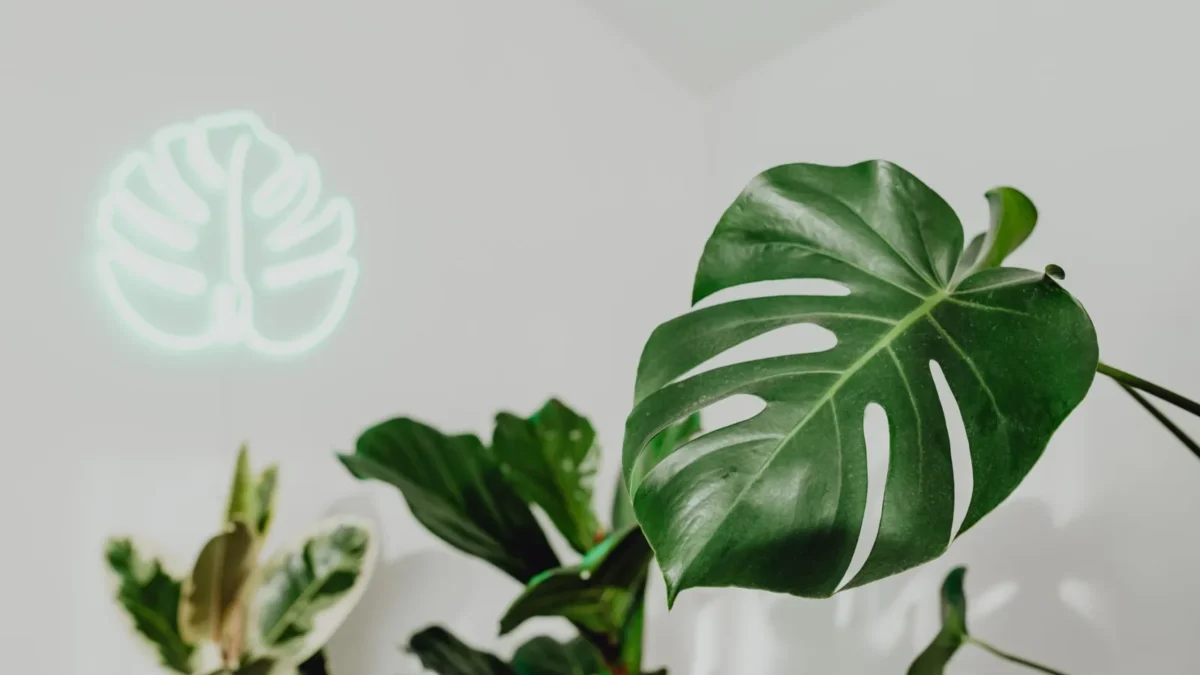
The key distinction here is indirect versus direct sunlight. Direct sun, especially at midday, scorches the leaves and causes brown damage. But low light causes a different problem: your Monstera will be healthy but slow, with small leaves and no fenestrations—those characteristic splits and holes that make the plant so visually striking.
Where to Place Your Monstera
For optimal light placement, position your Monstera near an east or west-facing window. These orientations deliver morning or late-afternoon sun filtered through the canopy, which is ideal. If you only have south-facing windows (which are brighter), place the plant 4 to 6 feet back and use a sheer curtain to soften the intensity. East or west windows work best 3 to 5 feet from the glass.
If your home is naturally dim or you’re concerned about light levels, a minimum of 4–6 hours of bright filtered light daily will keep the plant alive. But to develop those prized fenestrated leaves and encourage vigorous growth, aim for the full 6–8 hours in a bright, indirect spot.
Recognizing Light Problems
If your Monstera isn’t producing fenestrations (leaf holes), the most likely culprit is insufficient light. The plant won’t develop this feature under poor lighting conditions, even if it stays green and alive.
Yellow or light brown leaves often point to light stress combined with other factors. If your plant is in direct sun and developing brown, scorched patches, move it back or further from the window. A sheer curtain or plant shade cloth can filter intensity while keeping it close to natural light.
Seasonal Adjustments
Light availability changes throughout the year. In winter, when days are shorter and the sun is lower, your Monstera may receive less bright indirect light even in the same spot. Move it slightly closer to the window if growth noticeably slows, or rotate it occasionally to ensure all sides receive even light exposure.
FAQ
Will my Monstera be okay in low light?
Yes, your Monstera will survive in low light, but it will grow slowly and won’t develop the signature fenestrations or large leaves the plant is known for.
Can I use a grow light instead of a window?
While specific grow light requirements are not covered in detail, any consistent, bright indirect light source (whether from a window or grow light) can support growth and fenestration development.
Why are my Monstera’s leaves yellowing?
Yellow leaves often result from overwatering, poor drainage, or low humidity rather than light alone. Check that your soil dries between waterings (water when the top 2–3 inches are dry) and that humidity is above 50%.
Read the full guide: Monstera Care: The Complete Guide
More about Monstera
Sources
Photo: https://kaboompics.com/ / Pexels, Pexels