Monstera Monstera deliciosa
When to Repot Your Monstera: A Complete Guide
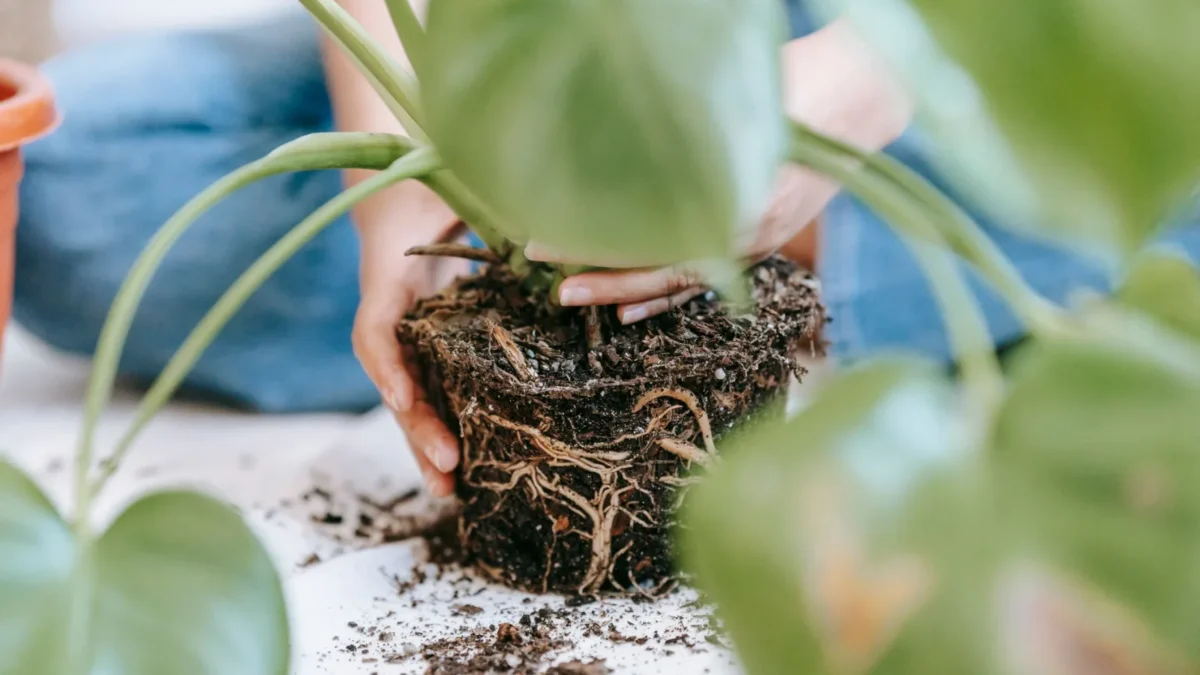
Quick answer: Repot your Monstera every two years or when you see roots growing through the drainage holes, circling the soil, or the plant drying out faster than usual—typically in spring when growth is most active.
| Botanical name | Monstera deliciosa |
|---|---|
| Light | 6-8 hours bright indirect light daily; tolerates low light but grows faster in bright indirect conditions; avoid direct |
| Watering | Water when top 2-3 inches of soil are dry; every 1-2 weeks typically; summer 7-10 days, winter 2-4 weeks |
| Humidity | Above 50%; ideally 60% or higher; use pebble tray or humidifier; avoid misting |
| Temperature | 65-85°F (18-29°C); avoid temperatures below 55°F (13°C) and cold drafts |
| Soil | Well-draining, chunky mix with perlite and orchid bark; neutral to slightly acidic pH 5.5-7 |
| Feeding | Balanced water-soluble fertilizer every 2-4 weeks during spring and summer growing season |
| Size | Up to 8-10 feet tall indoors; leaves up to 2 feet wide |
| Difficulty | easy |
| Cats | ⚠️ toxic — Calcium oxalate crystals cause mouth irritation, drooling, vomiting |
| Dogs | ⚠️ toxic — Calcium oxalate crystals cause mouth irritation, drooling, vomiting |
Signs Your Monstera Needs Repotting
A root-bound Monstera shows several clear signals that it’s time for a larger pot. Roots emerging from the drainage holes are the most obvious sign. You might also notice the plant drying out much faster than normal, even with regular watering, because there’s simply no room for soil to hold moisture. Stunted growth, yellowing leaves despite proper care, or circling roots visible at the soil surface all point to the same issue: the plant has outgrown its home.
Another way to check is to gently tip the pot to the side—if you see mostly roots with very little soil, repotting is due.
Best Time to Repot
Spring is the ideal time to repot your Monstera. This is when the plant is entering its most active growing phase and will quickly establish roots in fresh soil. While you can repot at other times if necessary, doing it in spring gives your plant the best chance to recover and thrive.
If your Monstera is root-bound and showing stress, don’t wait—repot immediately to prevent further damage, even if it’s not spring.
How to Repot Your Monstera
-
Choose the right pot and soil. Select a pot only 1–2 inches larger in diameter than the current one. Use a well-draining soil mix; standard potting soil is too dense and retains too much moisture. A chunky blend works best: try 40% potting soil, 30% orchid bark, 20% perlite, and 10% compost. This keeps the soil light and aerated around the roots.
-
Water before repotting. Water your Monstera a day or two before repotting to reduce transplant shock and make the root ball easier to handle.
-
Remove the plant. Gently slide the Monstera out of its old pot. If it’s stuck, run a knife around the inside edge or squeeze a flexible pot to loosen it.
-
Loosen the roots. Gently tease apart the root ball with your fingers to encourage roots to grow into the fresh soil. If roots are soft and mushy (a sign of root rot), trim affected roots with clean scissors.
-
Add soil to the new pot. Place a layer of your chunky soil mix in the bottom of the new pot, then set the Monstera in the center at the same depth as before. Don’t bury the stem deeper.
-
Fill around the roots. Add your soil mix around the sides, gently pressing down as you go. Fill until the soil level matches the original pot line.
-
Water thoroughly. Water well after repotting to settle the soil and eliminate air pockets.
-
Place in bright, indirect light. Keep your newly repotted Monstera in a warm spot with plenty of bright, indirect light—ideally 6 to 8 hours daily. Avoid direct sunlight, which can scorch the leaves.
Care After Repotting
After repotting, your Monstera may experience a brief adjustment period. Continue your normal watering routine: water when the top 2–3 inches of soil feel dry, which typically happens every 1–2 weeks. In summer, that’s usually every 7–10 days; in winter, every 2–4 weeks. Don’t fertilize for at least 4–6 weeks after repotting, as fresh soil contains nutrients.
Keep humidity above 50%—ideally 60% or higher—using a pebble tray or humidifier, as this supports root establishment. Avoid misting, which only provides brief humidity and can encourage fungal problems.
Can you cut yellow leaves off monstera?
Yellow leaves that are entirely discolored can be removed, but first identify the cause—usually overwatering or low light. Remove only the worst leaves once you’ve fixed the underlying problem, as the plant will redirect energy to new growth.
Should I take off yellow leaves?
If a leaf is mostly green, leave it to continue photosynthesizing. If it’s 80–90% yellow or brown and papery, you can prune it to tidy the plant and let it focus energy on healthy growth.
When to repot monstera cuttings
Once a Monstera cutting has developed several inches of roots (typically 4–6 weeks in water), transfer it to a small pot with your chunky soil mix. Water it in well, and treat it as a young plant until it establishes itself.
Read the full guide: Monstera Care: The Complete Guide
More about Monstera
Sources
Photo: Teona Swift / Pexels, Pexels