Philodendron Micans Philodendron hederaceum var. micans
What Light Does Philodendron Micans Need to Thrive?
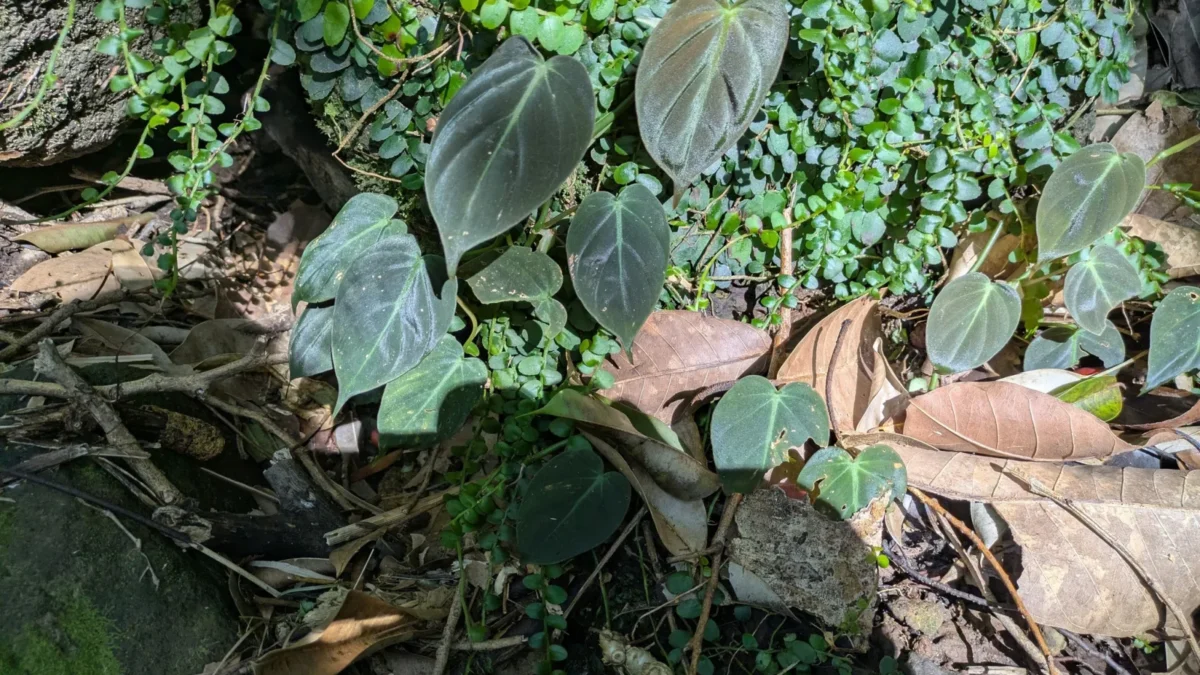
Quick answer: Philodendron Micans thrives in bright indirect light of 200–400 foot-candles for 8–12 hours daily. Avoid direct sun, which can burn the leaves, but don’t place it in too-dim conditions or the stems become spindly.
Philodendron Micans at a glance
| Botanical name | Philodendron hederaceum var. micans |
|---|---|
| Light | Bright indirect light; 200-400 foot-candles for 8-12 hours daily; avoid direct sun |
| Watering | Water when top 1-2 inches of soil are dry; every 7-10 days spring/summer, 10-14 days fall/winter |
| Humidity | 50-70% relative humidity preferred |
| Temperature | 65-80°F; keep above 59°F minimum |
| Soil | One-third peat-free potting soil, one-third perlite, one-third orchid bark |
| Feeding | Liquid houseplant fertilizer monthly April to September; stop in winter |
| Size | Vine; much smaller indoors due to container constraints |
| Difficulty | easy |
Ideal light conditions for Philodendron Micans
Bright filtered or indirect light is ideal. This means a spot near a window where the light is bright but filtered through a sheer curtain, or an interior location that receives reflected light from another room. A north-facing window, an east-facing window a few feet back, or a south-facing window behind a curtain all work well.
The velvety leaves of Philodendron Micans show their most attractive bronze and burgundy tones when the plant gets enough bright light. However, it’s also naturally shade-tolerant, so a lower-light location won’t kill it immediately. That said, in very dim conditions the plant may remain alive but won’t thrive—growth slows noticeably and the striking leaf color fades to plain dark green.
Signs your Philodendron Micans needs more light
Watch for spindly, stretched-out stems with large gaps between leaves. If it’s getting extra-leggy between leaves, that’s a clear sign of insufficient light. The plant will also lose its vibrant burgundy coloration and the leaves will turn darker green, losing the distinctive character that makes this plant special.
Too little light is a slow problem—the plant won’t collapse, but it won’t be as attractive or vigorous as it could be.
What happens with too much direct sun
Direct sun is harmful. Leaving Philodendron Micans in direct sun can lead to leaf burn and a leggy appearance. If your plant gets a lot of direct light, you may also notice the leaves turning red or maroon. Remember that red or bronze coloring on new leaves is often completely normal—fresh leaves naturally emerge in copper, bronze, pinkish-red, or maroon tones as part of the plant’s natural variegation. Red color alone is not proof the plant is getting too much light.
If you notice actual brown or crispy patches on the foliage, or if the plant becomes very leggy despite being in bright conditions, move it away from direct sun to a spot with filtered light.
Low-light tolerance and grow lights
Philodendron Micans is relatively shade-tolerant and can survive in lower light for extended periods, but survival isn’t the same as thriving. For the best results—vigorous growth and colorful foliage—aim for the full 200–400 foot-candles over 8–12 hours daily.
If your home is naturally dim, a grow light positioned 12–24 inches above the plant for 10–12 hours per day will keep it healthy and colorful. In seasonal changes, remember that light levels shift—move your plant to another indoor spot if needed when the seasons change and direct sun angles shift.
FAQ
Can Philodendron Micans grow in low light?
Yes, it tolerates shade better than many houseplants, but growth becomes minimal and leaves turn dark green, losing their distinctive color. For the full beauty of the plant, medium to bright indirect light is best.
Why are my Philodendron Micans leaves red?
New leaves naturally emerge in pink, bronze, or reddish tones and usually become darker as they mature. Bright light can intensify these red and maroon hues, which is normal and healthy—not a sign of stress.
Read the full guide: Philodendron Micans Care: The Complete Guide
More about Philodendron Micans
The same problem in other plants
- What Light Does Monstera Siltepecana Really Need?
- What Light Does Alocasia Frydek Need to Thrive?
- What Light Does Asparagus Fern Need?
- What Light Does a Norfolk Island Pine Really Need?
Sources
- Philodendron Micans Care: Watering, Soil & Light Guide – Houseplants Nook
- How to Grow and Care for Philodendron Micans
- Philodendron hederaceum var. hederaceum 'Mica'
Photo: kevinfaccenda / iNaturalist, CC BY 4.0