Norfolk Island Pine Araucaria heterophylla
What Light Does a Norfolk Island Pine Really Need?
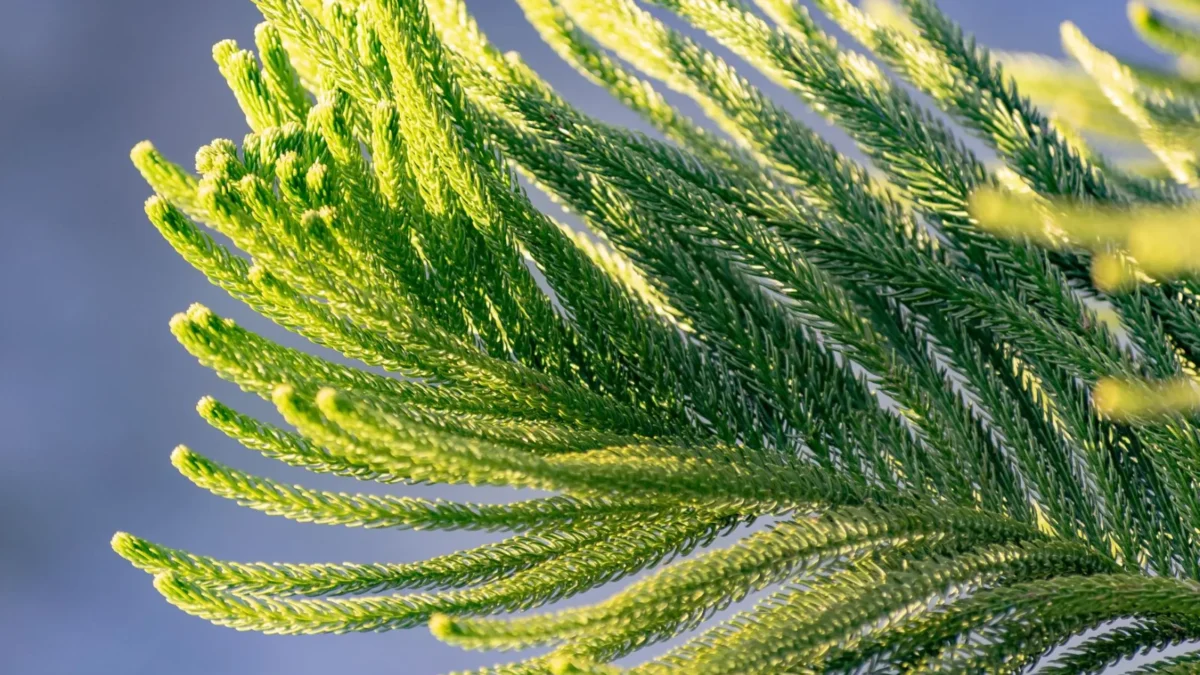
Quick answer: Norfolk Island Pines need the brightest indirect light you can provide indoors. Position them where they receive plenty of ambient brightness all day, but keep direct afternoon sun away to prevent scorching. If your home lacks sufficient natural light, you can supplement with fluorescent or incandescent grow lights.
Norfolk Island Pine at a glance
| Botanical name | Araucaria heterophylla |
|---|---|
| Light | Bright indirect light; avoid direct afternoon sun which causes scorching |
| Watering | Water when top 1 inch of soil feels dry; every 5-7 days spring/summer, 7-10 days fall/winter |
| Humidity | 50-70% humidity; low humidity causes browning tips |
| Temperature | Daytime 65-75°F; nighttime 55-65°F; keep above 50°F |
| Soil | Fertile, porous, sandy, peaty, slightly acidic, well-drained soil |
| Feeding | Weekly or biweekly dilute liquid fertilizer spring through fall |
| Size | Slow-growing; reaches 6+ feet tall indoors over years |
| Difficulty | easy |
| Cats | ✓ non-toxic |
| Dogs | ✓ non-toxic |
Ideal light placement for Norfolk Island Pine
Place your Norfolk Island Pine in an open, bright location, but not in full sun. The goal is maximum indirect light—think of a spot near a window where sunlight bounces around the room without directly hitting the needles, especially during afternoon hours.
Full sun does encourage compact, symmetrical growth, but the trade-off matters: direct sun, particularly through a west-facing window in summer, can scorch the needles and cause ugly brown or yellow patches. Some light afternoon shade may be needed to prevent possible foliage bleach.
A few practical placements work well:
– An east-facing window (gentle morning sun)
– Near a bright north-facing window
– A few feet back from a south or west-facing window
– Any spot with consistent all-day ambient brightness
What happens with too little or too much light
Low light will cause the tree to become leggy, with sparse, droopy branches and wide gaps between its tiers. The plant stretches toward whatever light is available and loses its attractive compact shape.
Too much direct sun causes brown leaves and scorching damage. If you notice this, move the plant further from the window or filter afternoon rays with a sheer curtain.
Using a grow light for Norfolk Island Pine
If your home doesn’t receive enough natural brightness, you can supplement with either fluorescent or incandescent sources. This is especially useful in winter months when daylight is limited, or in rooms far from windows.
Place a grow light 12–18 inches above the plant and run it for 12–14 hours daily. Monitor the needles for signs of stress: if the tips brown despite good watering and humidity, your light may be too intense or too close. If growth becomes sparse and leggy, increase light duration or intensity.
FAQ
Can Norfolk Island Pine survive in low light?
Norfolk Island Pines will survive in low light but become leggy and lose their tidy shape. They need bright indirect light to develop the dense, symmetrical form that makes them attractive houseplants.
Will a grow light help my Norfolk Island Pine grow faster?
A grow light provides the bright indirect light your Norfolk Island Pine needs to stay compact and full. It won’t dramatically speed growth—these are slow-growing plants—but it will prevent the weak, sparse growth caused by insufficient light.
How do I know if my plant is getting the right amount of light?
Look for a full, symmetrical shape with dense tiers of needles. If branches are sparse or drooping, light is too low. If needles are brown or yellowing, direct sun is too strong; increase shade and check that humidity is adequate.
Read the full guide: Norfolk Island Pine Care: The Complete Guide
More about Norfolk Island Pine
The same problem in other plants
- What Light Does Alocasia Frydek Need to Thrive?
- What Light Does Asparagus Fern Need?
- What Light Does Philodendron Micans Need to Thrive?
- Nerve Plant Light Requirements: Where to Place It
Sources
Photo: Rajesh S Balouria / Pexels, Pexels