String of Pearls Curio rowleyanus
How Often to Water String of Pearls: A Complete Guide
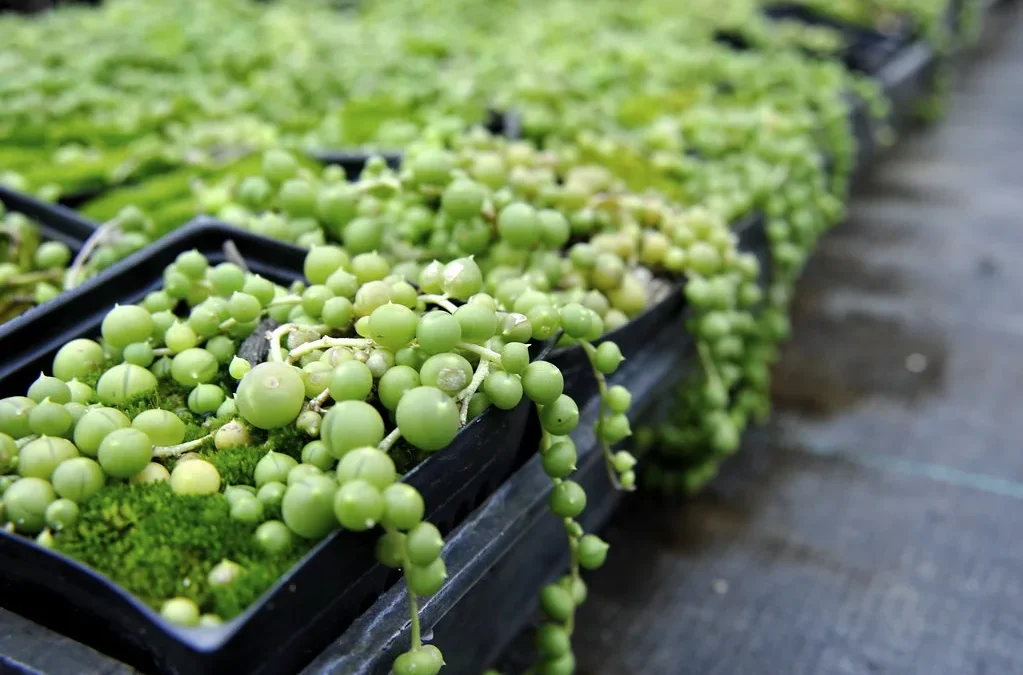
Quick answer: How often to water String of Pearls depends on the season—water thoroughly every 7-14 days in spring and summer when soil is completely dry, and reduce dramatically to every 3-4 weeks during fall and winter dormancy.
| Botanical name | Curio rowleyanus |
|---|---|
| Light | Bright indirect light; tolerates some direct morning sun; avoid harsh afternoon sun |
| Watering | Water every 7-14 days in spring/summer when soil completely dry; every 3-4 weeks in fall/winter |
| Humidity | Low humidity preferred; do not mist |
| Temperature | 70-80°F summer; 50-60°F winter; intolerant of frost |
| Soil | Well-draining cactus or succulent mix; sandy, dry soil |
| Feeding | Monthly in spring/summer with balanced fertilizer diluted to half strength; reduce or stop in fall/winter |
| Size | Trailing stems up to 90cm long; compact mounding base 4 inches tall |
| Difficulty | easy |
The Basic Watering Rule
String of Pearls (Curio rowleyanus) stores water in its round, bead-like leaves, so it’s built to handle dry spells better than most houseplants. The golden rule is to let the soil dry out completely between waterings, then water thoroughly until it drains from the bottom of the pot. Check the soil by inserting a finger about an inch deep — if it’s still damp, wait and check again in a few days.
Seasonal Watering Schedule
Spring and summer (growing season): Water thoroughly every 7-14 days once the soil is completely dry. This is when the plant is actively growing and its “pearls” are plumping up.
Fall and winter (dormancy): Cut back dramatically to every 3-4 weeks. The plant goes semi-dormant in cooler months and needs very little water — overwatering during this period is one of the most common ways String of Pearls dies.
Signs You’re Watering It Wrong
Underwatered pearls look flat or shriveled instead of round and plump. If you catch this early, a thorough watering usually plumps them back up within a few days.
Overwatering is the bigger risk and the #1 killer of this plant. Watch for pearls that turn translucent and soft, or a musty smell from the soil — both point to root rot setting in. If you suspect root rot, stop watering immediately, let the soil dry out fully, and trim away any mushy, blackened roots before repotting into fresh, well-draining succulent mix.
FAQ
Should I mist my String of Pearls for humidity?
No. This plant doesn’t need extra humidity and shouldn’t be misted — water sitting on the leaves and stems can encourage rot rather than help the plant.
What’s the best way to water String of Pearls — top or bottom watering?
Bottom watering works well: set the pot in a shallow dish of water for about 45 minutes, then remove it and let it drain fully. This keeps water off the leaves and ensures it reaches the roots evenly.
How do I know if my String of Pearls has root rot?
Look for mushy, translucent pearls, a sour or musty smell from the soil, and dark, soft roots when you check the root ball. If you catch it early, trimming the rotted parts and repotting in dry, fresh soil can save the plant; if the damage is extensive, take healthy cuttings and propagate a new plant instead.
Read the full guide: String of Pearls Care: The Complete Growing Guide
More about String of Pearls
The same problem in other plants
- How Often Should You Water Lucky Bamboo?
- How Often Should You Water Echeveria?
- How Often to Water Haworthia: The Right Schedule
- How Often Should You Water a Bird's Nest Fern?
Sources
- String of Pearls Care: Watering, Light & Problem Fixes
- Why Are My String Of Pearls Leaves Dropping? 🦪
- Common Problems With String Of Pearls Plant: Comprehensive Guide And Solutions
Photo: MeganEHansen / Flickr, CC BY-SA 2.0