String of Pearls Curio rowleyanus
Is String of Pearls Toxic to Cats and Dogs?
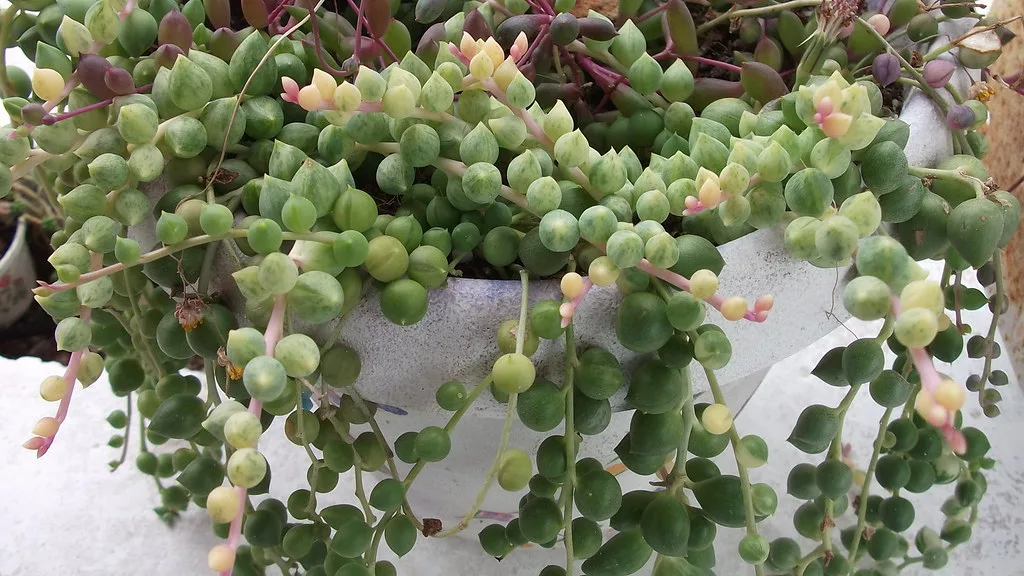
Quick answer: String of Pearls is toxic to both cats and dogs. If your cat or dog ingests any part of the plant, contact your vet or the ASPCA Animal Poison Control Center immediately.
| Botanical name | Curio rowleyanus |
|---|---|
| Light | Bright indirect light; tolerates some direct morning sun; avoid harsh afternoon sun |
| Watering | Water every 7-14 days in spring/summer when soil completely dry; every 3-4 weeks in fall/winter |
| Humidity | Low humidity preferred; do not mist |
| Temperature | 70-80°F summer; 50-60°F winter; intolerant of frost |
| Soil | Well-draining cactus or succulent mix; sandy, dry soil |
| Feeding | Monthly in spring/summer with balanced fertilizer diluted to half strength; reduce or stop in fall/winter |
| Size | Trailing stems up to 90cm long; compact mounding base 4 inches tall |
| Difficulty | easy |
What happens if cats eat String of Pearls
String of Pearls contains pyrrolizidine alkaloids. When cats chew or ingest the plant, they may develop vomiting, diarrhea, and lethargy. The sap in the leaves can also irritate your cat’s skin.
If you suspect your cat has eaten any part of this plant, remove it from reach immediately and call your vet or the ASPCA Animal Poison Control Center right away. Do not induce vomiting unless a vet specifically instructs you to, as it can make some poisonings worse.
What happens if dogs eat String of Pearls
String of Pearls is toxic to dogs. Ingesting the leaves or stems causes lethargy and vomiting. Like with cats, the leaf sap can irritate your dog’s skin.
If your dog eats any part of the plant, contact your vet immediately. In both cats and dogs, symptoms can include vomiting, diarrhea, lethargy, and central nervous system depression. Do not induce vomiting—call your vet or an emergency animal clinic right away instead.
Other pets and humans
While toxicity data for birds and other small pets is limited, it’s safest to keep String of Pearls out of reach of all pets. The sap can irritate human skin too, so handle the plant with care and wash your hands after pruning or propagating.
Keeping String of Pearls safely in a pet home
The easiest solution is to place your String of Pearls in a location your pets cannot reach—a high shelf, hanging planter, or closed room works well. If you prefer to keep it accessible, use a sturdy hanging basket where curious cats or dogs cannot pull it down or chew on the trailing stems.
FAQ
Can String of Pearls kill my cat or dog?
Severe poisoning is possible if large amounts are ingested, which is why immediate veterinary attention is essential if you suspect ingestion.
Is the sap dangerous if it touches my pet’s skin?
Yes; the sap can irritate skin in both pets and humans. Wash the area if contact occurs and monitor for redness or irritation.
Read the full guide: String of Pearls Care: The Complete Growing Guide
More about String of Pearls
The same problem in other plants
- Is English Ivy Toxic to Cats and Dogs?
- Is Dieffenbachia Toxic to Cats and Dogs?
- Is Chinese Evergreen Toxic to Cats and Dogs?
- Is Money Tree Toxic to Cats and Dogs?
Sources
- Is string of pearls toxic to cats and dogs? – Botanicaly
- Are String of Pearls Toxic to Cats? Keeping Your Pet Safe
- Is String of pearls (Curio) Toxic to Cats? Yes — Toxic
Photo: succulentlover77 / Flickr, Public domain