Bromeliad Guzmania
How Often to Water Bromeliads: Complete Watering Guide
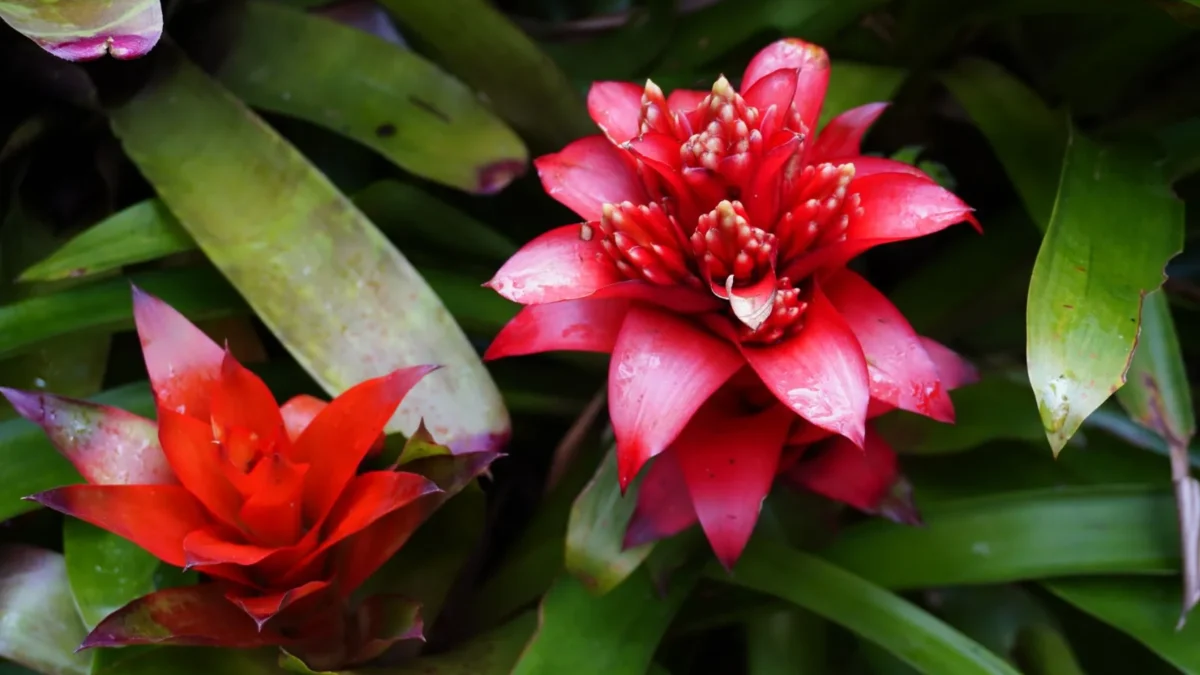
Quick answer: Water the central cup of your bromeliad by keeping it ¼ to ½ way full at all times, and water the soil when the top dries out. How often to water bromeliads depends on the season: in summer, keep the soil damp but not soggy, while in winter, water more sparingly and let the soil dry out between waterings.
| Botanical name | Guzmania |
|---|---|
| Light | Bright, indirect light; tolerates low light and artificial light |
| Watering | Keep central cup filled ¼ to ½ way; water soil when top dries; empty/refill cup monthly |
| Humidity | High humidity; mist regularly; use pebble tray or humidifier |
| Temperature | Summer 21°C (70°F); cooler 12°C (55°F) when buds form; minimum 10°C (50°F) winter |
| Soil | Peat-free, loam-free, free-draining mix of fine bark, perlite, coir fibre |
| Feeding | Half-strength diluted fertilizer or less |
| Size | 1.00 to 2.00 feet height and spread |
| Difficulty | easy |
The Two-Part Watering System
Bromeliads like Guzmania have a unique structure that requires a two-part approach to watering. The central cup (or tank) in the rosette is where the plant naturally collects water, and the soil around the roots needs separate attention.
The central cup should always be kept topped up—ideally with rainwater or distilled water. Keep it filled ¼ to ½ way full of water at all times. Every month or two, empty and refill it with fresh water to prevent the water from becoming stagnant. You can freshen the cup by overfilling it until water spills over into the pot, which also helps rinse away mineral buildup.
For the soil, water well and then allow it to dry before watering again. Guzmania are prone to root rot if the soil is kept wet, so proper drainage is essential. Using a peat-free, loam-free, free-draining potting mix of fine bark, perlite, and coir fibre will help water drain quickly.
Seasonal Watering Frequency
Bromeliad watering needs change with the seasons. In summer, keep the water in the cup at the center of the plant, especially during those months, and water the compost to keep it damp but not soggy. During growth, mist daily with rainwater.
In winter, water more sparingly and let the compost dry out between waterings. Keep the plant barely moist with no misting. Provide a minimum of 10°C (50°F) during winter to prevent damage.
Water Quality Matters
Use rainwater or tap water that has been allowed to sit for a day or two to remove chlorine and fluorine. Tap water with high mineral content can cause mineral buildup on leaves, so filtered, rain, or distilled water is preferred. This prevents the brown spots that often appear from chemical residue.
Signs of Watering Problems
Brown and dry leaves usually mean you’re underwatering. However, if the soil stays too dry for too long, the roots can die back and it becomes difficult for the plant to take up moisture. If you’ve kept the growing medium too wet, the lower leaves will turn brown and mushy, which signals root rot from overwatering.
Low humidity can also cause crispy leaves. Increase humidity by standing the container on a saucer of damp gravel or clay pellets and misting the leaves regularly, or use a humidifier.
Watering Bromeliad Pups
Once the flower fades, the rosette dies and is replaced by offsets (pups) at the base. When potting pups, keep the soil evenly moist but not soggy. Fill the pup’s central cup with water as you would with a mature plant. It should take around 4 weeks for bromeliad pups to root; you’ll know they’re rooted when you see new growth.
How often should I mist my bromeliad?
Mist daily with rainwater during the growing season. In winter, avoid misting and keep the plant barely moist.
Can I use tap water directly in the central cup?
You can, but it’s better to let tap water sit for a day or two to remove chlorine and fluorine, or use rainwater or distilled water to avoid mineral buildup and brown spots.
What’s the difference between watering indoors and outdoors?
Bromeliads grown indoors need the same core watering routine—cup kept ¼ to ½ full, soil allowed to dry between waterings—but indoor plants often need more frequent misting to replicate the humid tropical conditions they prefer.
Read the full guide: Bromeliad Care: The Complete Guide
More about Bromeliad
The same problem in other plants
- How Often Should You Water a Bird's Nest Fern?
- How Often Should You Water Your Philodendron Birkin?
- How Often to Water Hoya Kerrii and How to Know When It Needs Water
- How Often Should You Water African Violets?
Sources
- How to grow bromeliads / RHS Growing Guide
- Why are the leaves on my Bromeliad brown, dry, and crispy?
- Guzmania lingulata – Plant Finder
Photo: Keith Sykes / Pexels, Pexels