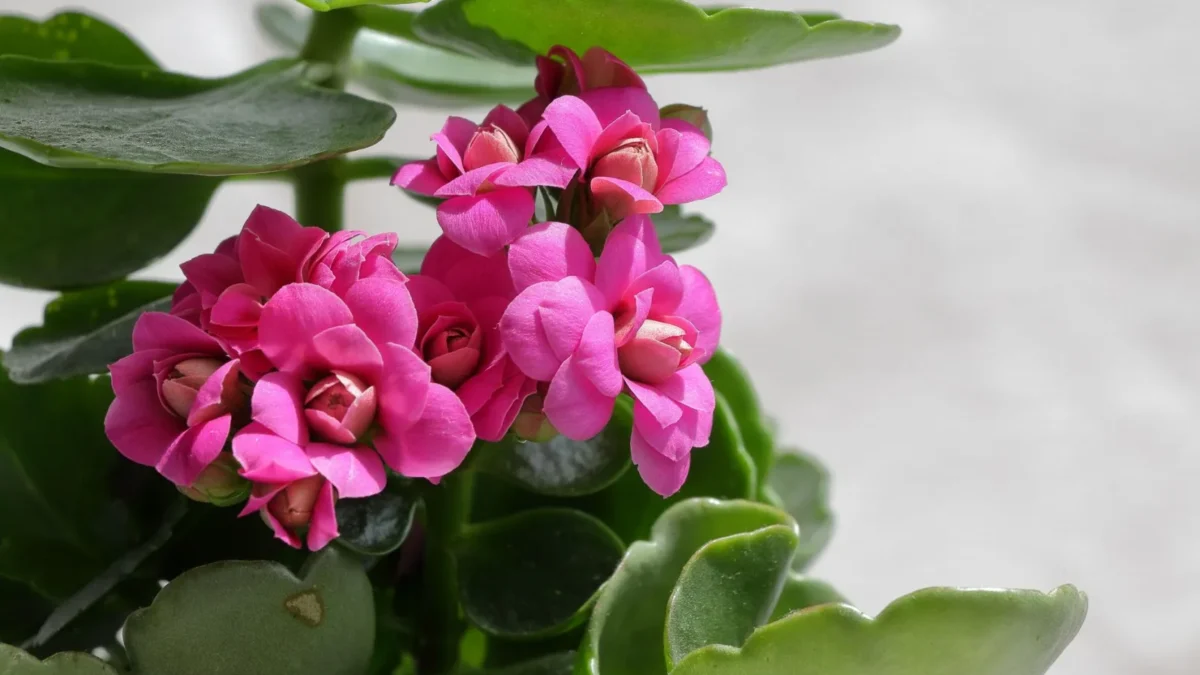
Kalanchoe Kalanchoe blossfeldiana
How Often Should You Water Kalanchoe: A Seasonal Guide
Quick answer: How often? Water kalanchoe every 10-14 days during the growing season when the soil is dry, then reduce watering to once every 3-4 weeks in winter.
| Botanical name | Kalanchoe blossfeldiana |
|---|---|
| Light | Bright filtered light; avoid bright direct sunlight year-round |
| Watering | Water when soil is dry; every 10-14 days during growth, every 3-4 weeks in winter |
| Humidity | Low humidity; does not require misting; avoid humidity above 90% |
| Temperature | 55°F to 80°F; keep above 40°F; reduce by 5°C in winter |
| Soil | Fast-draining cactus mix or peat-free loam-based compost with added grit |
| Feeding | Balanced liquid fertilizer 2-3 times during growing season at half strength |
| Size | Bushy evergreen succulent to 40cm tall |
| Difficulty | easy |
| Cats | ⚠️ toxic — Bufodienolides cause vomiting, diarrhea, abnormal heart rhythm |
| Dogs | ⚠️ toxic — Bufodienolides cause vomiting, diarrhea, abnormal heart rhythm |
The Basic Watering Rule
Kalanchoe is a succulent that prefers to dry out between waterings. The key is to water thoroughly when you do water, then wait until the soil is completely dry before watering again. When you water, soak the soil fully; then leave it alone until the soil is dry all the way down.
The difference between seasons matters. During spring and summer when the plant is actively growing, water every 10-14 days. In winter, when growth slows dramatically, reduce watering to once every 3-4 weeks.
Seasonal Adjustments
Kalanchoe’s metabolism changes significantly in winter as days shorten and the sun weakens. This isn’t just about cutting back on water—it’s essential for keeping the plant healthy and allowing it to flower the following season. Reducing water frequency mimics the plant’s natural dormancy period.
If you live somewhere with consistent warmth year-round indoors, you still need to adjust. A temperature drop of around 5°C in winter helps trigger the plant’s natural cycle. Without these seasonal shifts, your kalanchoe may stop flowering altogether, even if you get everything else right.
Recognizing Overwatering Problems
Overwatering kills more kalanchoe plants than any disease or pest. Soggy soil suffocates roots and invites fungal rot.
Watch for these warning signs:
- Yellow leaves, especially if soft or mushy
- Squishy, yellowed leaves that eventually fall off
- Soft or mushy leaves with a blackened stem base
- Soil that stays wet for days
Root rot is the most serious consequence. Symptoms include rapidly yellowing leaves, mouldy soil, stunted growth, and a rotten brown base. Overwatering also prevents flowering and causes leaves to drop off.
If you see these signs, stop watering immediately, check the soil, and repot into fresh, dry cactus mix if needed. Use a pot with drainage holes and fast-draining soil—either peat-free loam-based compost with added grit or a cactus mix.
FAQ
How do I know when to water?
Check the soil with your finger. Water only when the top 2 inches feel completely dry. This simple test prevents both overwatering and underwatering.
Does kalanchoe need misting?
No. Kalanchoe doesn’t require regular misting; it’s adapted to arid conditions and the humidity in most homes suits it fine. In fact, excess humidity above 90 percent can cause leaf spot, leaf drop, and damage to flowers.
Why isn’t my kalanchoe blooming?
The most common reason is too much light year-round. Kalanchoe needs six weeks of 12-14 hours of darkness daily to form flowers. Without this winter rest period, the plant fails to re-bloom. Reduce light and temperature slightly during late autumn and winter.
Read the full guide: Kalanchoe Care: The Complete Guide
More about Kalanchoe
The same problem in other plants
- How Often to Water Bunny Ears Cactus
- How Often Should You Water Tradescantia Zebrina?
- How Often Should You Water a Weeping Fig?
- How Often Should You Water Lucky Bamboo?
Sources
- How Often to Water Kalanchoe? Every 10-14 Days
- Our Care-Guide for Flaming Katies! (Kalanchoe Blossfeldiana)
- Kalanchoe Care Guide: Watering, Light & Growing Tips
Photo: Mustafa Akın / Pexels, Pexels