Lucky Bamboo Dracaena sanderiana
How Often Should You Water Lucky Bamboo
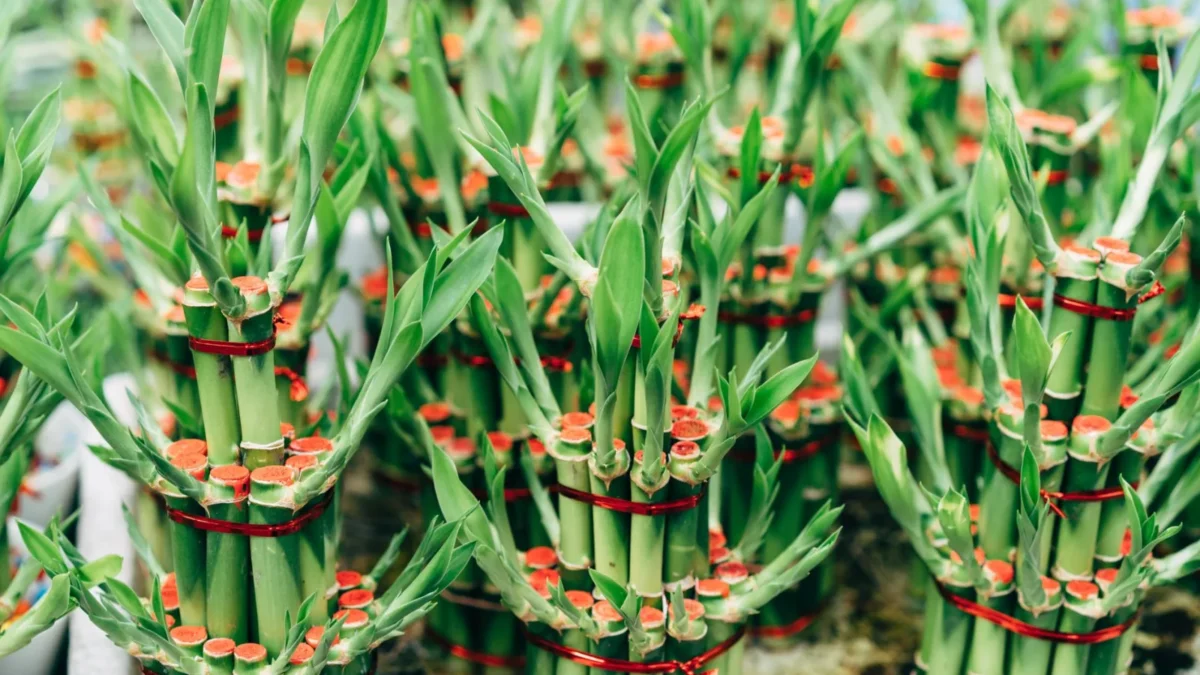
Quick answer: How often to water lucky bamboo depends on where it’s growing. In soil, water when the top 1–2 inches feel dry—typically every 6 to 8 days in summer and every 11 to 17 days in winter. If growing in water, change the water completely every 2 to 3 weeks, and refresh or rinse it weekly to prevent biofilm and bacterial buildup.
| Botanical name | Dracaena sanderiana |
|---|---|
| Light | Bright indirect light; avoid direct sun which scorches foliage |
| Watering | Water when top 1-2 inches of soil dry; every 6-8 days summer, 11-17 days winter. If in water, change every 2-3 weeks. |
| Humidity | Moderate to high humidity (40-60%); mist leaves or place in humid location |
| Temperature | 18-32°C (65-90°F); keep away from drafts and temperatures below 50°F |
| Soil | Rich, well-draining potting mix with peat, perlite or sand; or grow in water |
| Feeding | In soil: balanced fertilizer at half strength every 4-6 weeks growing season. In water: liquid houseplant fertilizer at |
| Size | 3-5 feet height and spread indoors, typically smaller |
| Difficulty | easy |
Watering Lucky Bamboo in Soil
For lucky bamboo in pots, the finger test is your best guide. Stick your finger about an inch into the soil; if it feels dry, water. In spring and summer, this usually means watering every 6 to 8 days, while in winter you’ll slow down to every 11 to 17 days as growth slows. Warmer rooms or brighter light speed up drying, while cooler spots or lower light extend the interval between waterings.
The biggest risk is overwatering—it causes 83% of root failures in lucky bamboo. Overwatering triggers root rot, shown by mushy, brown-black stems at the base, a foul smell, and sudden leaf drop. Always use a rich, well-draining potting mix with peat, perlite, or sand to help prevent sitting water from damaging the roots.
Watering Lucky Bamboo in Water or Rocks
When growing lucky bamboo in water, rocks, pebbles, or a vase, your job is different: you’re not checking soil dryness but keeping the water fresh and oxygenated. Change the water completely every 2 to 3 weeks to prevent algae buildup and root rot. Weekly, swirl the water gently to loosen biofilm, rinse the roots under lukewarm running water, check for slimy or grayish coatings (early rot signs), and refill with fresh water.
Stagnant water is a fast track to trouble; bacteria like Pseudomonas cichorii thrive in old water and cause stem softening. Fill only enough fresh water to cover the bottom 1–2 inches of the stalks.
Water Quality Matters
Lucky bamboo is genuinely sensitive to salts and fluoride in tap water. Tap water with more than 0.5 ppm fluoride or 1.0 ppm chlorine causes necrotic brown tips and basal rot. Use filtered, distilled, or rainwater where possible. If you must use tap water, let it sit uncovered for 24 hours to let chlorine dissipate—though fluoride will remain, so a carbon or reverse osmosis filter is ideal.
Signs You Are Watering Too Much or Too Little
Yellowing leaves and soft, mushy growth usually signal overwatering. In soil, allow the top 1–2 inches to dry before watering again. In water, stick to your 2–3 week water change schedule and rinse the container weekly.
Underwatering is less likely to kill lucky bamboo but slows growth. If leaves curl lengthwise, the plant needs water; a thorough soak should relax the leaves within an hour or two.
FAQ
How often should you water lucky bamboo in winter?
Reduce watering to every 11 to 17 days in winter since the plant grows slowly in cooler months and needs less water. If growing in water, still change it every 2 to 3 weeks.
Can you leave lucky bamboo in rocks without changing water?
No—change the water every 2 to 3 weeks and rinse weekly,. Rocks or pebbles don’t replace this need; they just hold the stem upright while water does the feeding and transport work.
Read the full guide: Lucky Bamboo Care: The Complete Guide
More about Lucky Bamboo
The same problem in other plants
- How Often Should You Water Tradescantia Zebrina?
- How Often Should You Water a Weeping Fig?
- How Often Should You Water Kalanchoe?
- How Often Should You Water Echeveria?
Sources
- Dracaena Sanderiana Plant Care: Water, Light & Propagation Guide
- Dracaena Sanderiana Care: Truths, Myths & Proven Methods
- Lucky bamboo care (Dracaena sanderiana): light and water
Photo: Markus Winkler / Pexels, Pexels