Satin Pothos Scindapsus pictus
Why Are My Satin Pothos Leaves Curling? Causes and Fixes
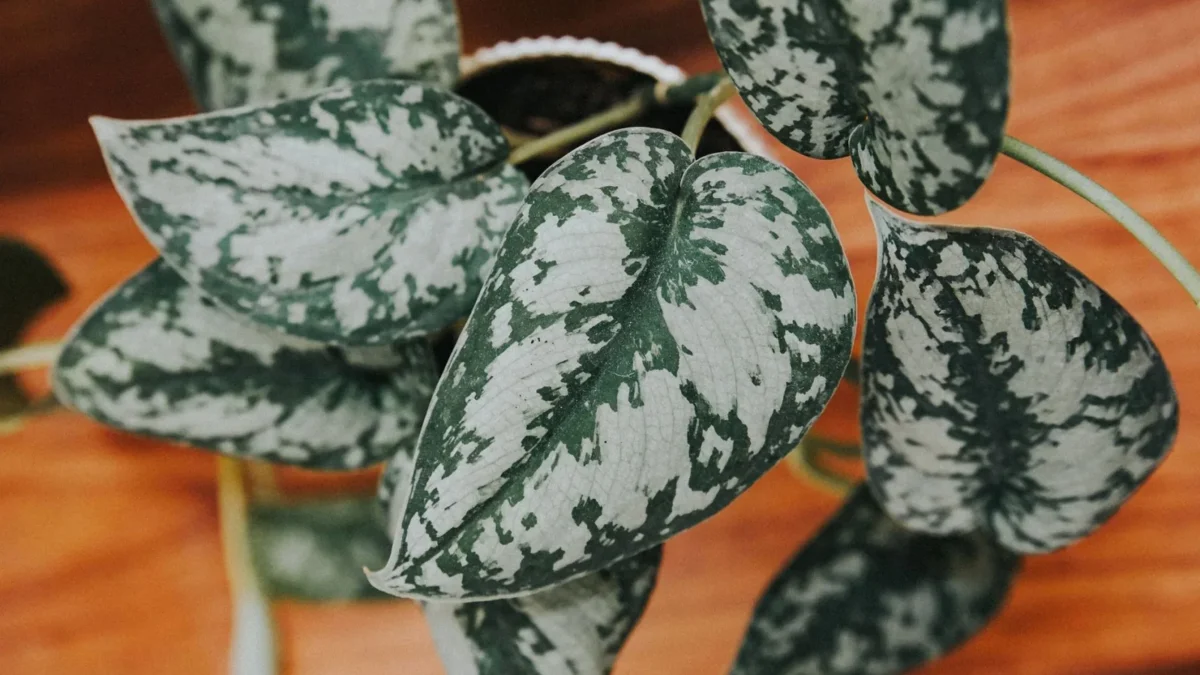
Quick answer: Satin pothos leaves curl inward mainly when the soil is too dry, humidity drops below 50%, temperatures fall below 60°F, the plant is overwatered, or you’re using too much fertilizer. Each cause needs a different fix—and identifying which one is affecting your plant is straightforward once you know what to look for.
| Botanical name | Scindapsus pictus |
|---|---|
| Light | bright indirect light; avoid direct sun |
| Watering | water when top inch of soil feels dry; avoid overwatering |
| Humidity | 40-60% |
| Temperature | 65-85°F; avoid below 60°F |
| Soil | peaty, well-draining potting mix |
| Feeding | balanced liquid fertilizer monthly during growing season |
| Size | trailing/climbing to 1m or more |
| Difficulty | easy |
| Cats | ⚠️ toxic — insoluble calcium oxalates; oral irritation, swelling, drooling, vomiting |
| Dogs | ⚠️ toxic — insoluble calcium oxalates; oral irritation, swelling, drooling, vomiting |
| What you see | Likely cause | What to do |
|---|---|---|
| Leaves curl inward, soil is dry at the top | Underwatering | Water when the top inch of soil feels dry. The curled leaves are your plant’s thirst signal. |
| Soil is wet, leaves curl and wilt, mushy base | Overwatering/root rot | Stop watering immediately. Check for mushy, brown leaves at the base—a sign of root rot. Repot into fresh, well-draining soil. |
| Leaves curl, humidity feels low, no soil issues | Low humidity | Increase humidity to 40–60%. Mist regularly, group plants together, or use a humidifier. |
| Leaves curl, temperature is below 60°F | Cold stress | Move the plant away from cold drafts, windows in winter, or air conditioning. Keep your home between 65–85°F. |
| Leaves curl, you’ve fertilized recently | Overfertilization | Flush the soil with water to remove excess nutrients. Apply fertilizer only monthly during the growing season. |
| Leaves curl, brown or soft spots appear | Fungal/bacterial issues combined with moisture stress | Improve air circulation, avoid wetting leaves, and reduce watering frequency. |
How to identify the cause of curling leaves
Start by checking your soil. Press your finger into the top inch—if it’s bone-dry and the leaves curl inward, you’re underwatering. If the soil is soggy and the base of the plant feels mushy, root rot is the problem. Both situations cause curling, but the fixes are opposite.
Next, notice your home’s conditions. Satin Pothos thrives in humidity between 40% and 60%. When humidity drops below 50%, the plant curls its leaves to conserve moisture. Low humidity often happens in winter near heating vents or in naturally dry climates. Similarly, if your room regularly drops below 60°F, cold stress can cause curling and yellowing.
Overwatering is a common mistake. Unlike underwatering, which shows up as dry curling, overwatered plants develop soft, yellowing leaves. The plant sits in soggy soil, roots rot, and although the soil is wet, the roots can’t absorb water—so leaves curl and wilt. Satin Pothos actually prefers to dry out slightly between waterings.
Finally, check your feeding schedule. Excess fertilizer can stress the plant and cause leaf curling. You need only monthly applications during the growing season—less is better.
How to fix satin pothos leaves curling inward
- For dry soil: Water thoroughly when the top inch feels dry. Curled leaves will slowly uncurl as the plant rehydrates.
- For soggy soil: Stop watering immediately. Repot into fresh, well-draining potting mix if root rot is suspected. Remove any mushy leaves.
- For low humidity: Mist the foliage regularly or place the pot on a pebble tray filled with water (don’t let the pot sit in water). Aim for 40–60% humidity.
- For cold temperatures: Move the plant to a warmer spot, away from drafts and air conditioning. Maintain room temperatures of 65–85°F.
- For overfertilization: Flush the soil with water to remove excess salt buildup, then reduce feeding to once monthly.
Prevention and ongoing care
Water when the top inch of soil feels dry, not on a fixed schedule. This prevents both underwatering and the overwatering that leads to root rot. Use well-draining potting mix to help excess water drain quickly.
Keep humidity steady at 40–60% and temperatures between 65–85°F. In winter, move your plant away from cold windows and heating vents. Fertilize only monthly during the growing season—skipping doses is fine and actually safer than overdoing it.
Remove any yellowed or damaged leaves promptly to prevent pest and disease problems. With consistent watering, stable conditions, and moderate feeding, your satin pothos will stay healthy and its leaves will stay flat and glossy.
Read the full guide: Satin Pothos Care: The Complete Guide
More about Satin Pothos
The same problem in other plants
- Why Are My ZZ Plant Leaves Curling?
- Why Are My String of Dolphins Leaves Flat? The Causes and Solutions
- Why Are My Ficus Audrey Leaves Curling?
- Why Are My Philodendron Birkin Leaves Curling?
Sources
- Scindapsus pictus 'Argyraeus' – Plant Finder
- Satin Pothos Care: Fix Curling Leaves on Scindapsus
- 5 Reasons Your Satin Pothos Leaves Are Curling
Photo: Kenneth Surillo / Pexels, Pexels