Money Tree Pachira aquatica
Is Money Tree Toxic to Cats and Dogs? Safety Guide for Pet Owners
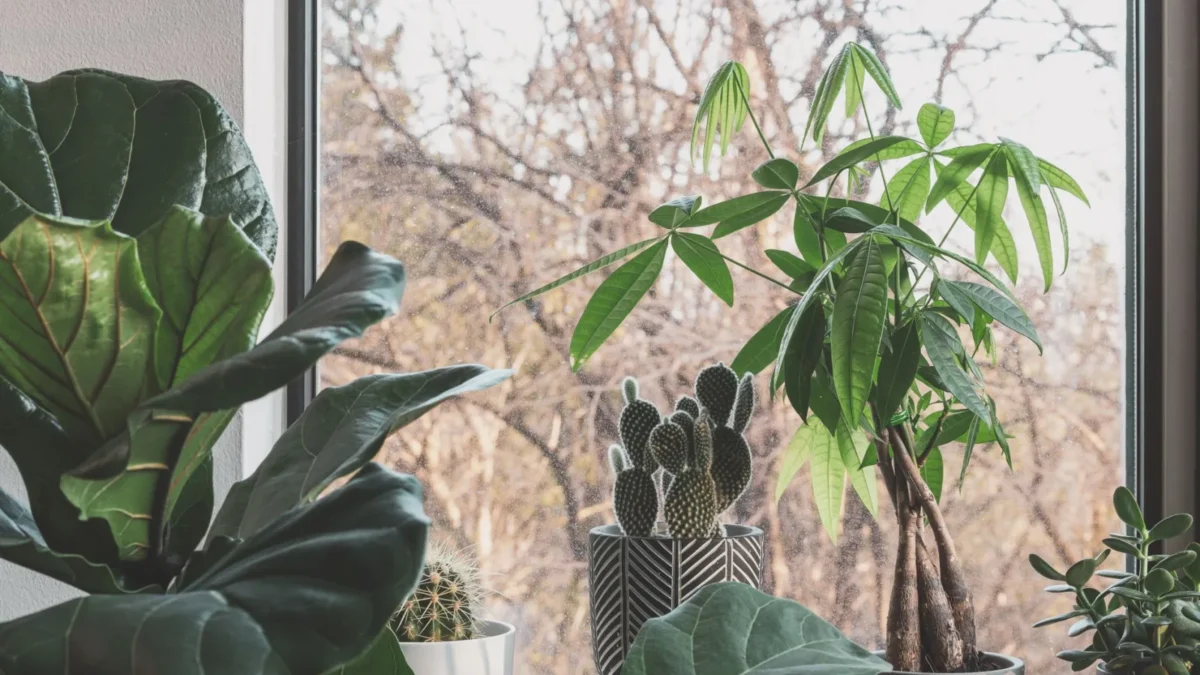
Quick answer: Money tree (Pachira aquatica) is non-toxic to both cats and dogs, so you can safely keep this houseplant in a home with pets.
| Botanical name | Pachira aquatica |
|---|---|
| Light | bright indirect light; tolerates partial shade; avoid direct sun 10am-3pm |
| Watering | water when top 2-3 inches of soil completely dry; every 1-2 weeks spring/summer; every 3-5 weeks fall/winter |
| Humidity | around 50% humidity; at least 50% to thrive; use pebble tray, humidifier, or misting |
| Temperature | 65-90°F (18-32°C); avoid cold drafts |
| Soil | well-draining; neutral to acidic pH; peat, perlite, sand mix |
| Feeding | balanced liquid fertilizer every 4-6 weeks spring/summer at half-strength; every 2-3 months fall/winter |
| Size | up to 1.5m in pot; reaches 20m in tropical habitat |
| Difficulty | easy |
| Cats | ✓ non-toxic |
| Dogs | ✓ non-toxic |
Pet owners often worry about houseplants, especially cats that like to chew leaves. The good news is that the money tree poses no toxin risk to either cats or dogs. However, that doesn’t mean your pet can munch on it without any consequences.
Safety for cats and dogs
Money tree is non-toxic to cats and non-toxic to dogs, with no toxic principles present in the plant. This means the plant itself won’t poison your pet, even if they eat a leaf or two.
That said, if your cat or dog eats a lot of the plant, they may still experience a mild upset stomach. Clinical signs of plant ingestion can include nausea, vomiting and loose stool. These symptoms are not due to toxins but rather from the plant material itself irritating the digestive system. If your pet shows any of these signs after eating the plant, monitor them closely. In most cases, the symptoms are mild and temporary.
Care tips to reduce pet nibbling
While money tree is safe, preventing your pets from eating large amounts is still wise. Here are a few practical ways to make the plant less tempting:
- Place it out of reach: Cats love high spots, and dogs may be curious at ground level. Use shelves, plant stands, or high tables to keep the plant where your pet can’t easily access it.
- Keep the plant healthy: A lush, well-cared-for money tree is less appealing than a weak one. Money trees are among the easiest houseplants to care for, typically only needing watering every 1–2 weeks. A healthy plant recovers quickly if a pet does take a nibble.
- Offer alternatives: Provide cat grass or pet-safe plants nearby to redirect your pet’s attention.
Safety for humans and children
The money tree is equally safe for humans and children. There are no toxic principles in the plant, so accidental ingestion poses no poisoning risk to anyone in your household.
Is money tree toxic to humans?
No, money tree is non-toxic to humans. There is no risk of poisoning from contact or ingestion.
Is money tree toxic to kids?
No, money tree is non-toxic to children, making it a family-friendly houseplant for homes with young children.
Can I grow money tree around pets?
Yes. Since money tree is non-toxic to cats and dogs, it is safe to display openly in any room of your home. Just ensure the plant is stable and won’t fall if a curious pet nudges it.
Read the full guide: Money Tree Care: The Complete Guide
More about Money Tree
The same problem in other plants
- Is Dieffenbachia Toxic to Cats and Dogs?
- Is Chinese Evergreen Toxic to Cats and Dogs?
- Is String of Pearls Toxic to Cats and Dogs?
- Is Bird of Paradise Toxic to Cats and Dogs?
Sources
- Toxic and Non-toxic Plants: Money Tree
- Money Tree Care Guide (Pachira aquatica)
- Is a Money Tree Toxic to Cats and Dogs? No – Botanicaly
Photo: Scott Webb / Pexels, Pexels